Catering Software 2026: Build, Automate, and Scale Your Events with Data-Driven Tools
The catering industry of 2026 looks nothing like it did just a few years ago. Today’s event landscape is bigger, faster, and far more demanding. Caterers must serve hybrid events, corporate contracts, high-volume deliveries, and clients who expect personalization, transparency, and instant communication. At the same time, costs are rising and margins are tightening - pushing businesses to operate with greater precision and efficiency.

Manual coordination, spreadsheets, and disconnected apps are no longer enough. They slow down teams, create errors, and limit how many events you can handle. That’s why modern caterers are turning to catering management software to centralize their workflows, automate repetitive tasks, and unlock data-driven insights.
Catering software brings your entire operation together - kitchen, sales, logistics, customer management, billing, deliveries, and analytics - into one unified platform.
In 2026, catering software isn’t just a tool.
It’s the engine driving profitable, automated, and scalable catering businesses.
Why Catering Businesses Need Smarter Software in 2026
The catering world has entered a new era. What used to be a straightforward business - plan events, prepare food, deliver - is now a complex mix of logistics, dietary personalization, sustainability requirements, and high-speed communication.
Key industry demands shaping 2026:
Sustainability expectations: Clients want waste-controlled, eco-friendly operations.
Instant communication: Real-time confirmations, delivery ETA, and automated updates.
Personalized menus: Vegan, gluten-free, allergen-free, macro-specific options.
Hybrid events: Combining in-person service with packaged delivery.
Dynamic scheduling: Multiple events per day, across locations, requiring precision.
To meet these demands, caterers must operate with real-time data, automation, and integrated tools that eliminate duplicated work.
Manual vs. Software-Driven Catering Workflows
In 2026, caterers who don’t embrace software risk falling behind competitors who run faster, smarter, and leaner operations.
What Catering Software Actually Does (End-to-End Overview)
Catering software covers your operation from the moment a client inquires to the moment you close out the event - and every step in between.
Here’s the full breakdown:
Event Management
Store client details, guest counts, timelines, dietary needs, and menu selections in one place.Staff & Schedule Coordination
Assign chefs, servers, bartenders, and drivers with clear visibility across events.Inventory Control
Track ingredient usage, automate purchase orders, and eliminate overbuying.CRM & Client Management
Manage leads, proposals, contracts, payment status, and returning clients.Menu Design & Costing
Build menus with automated cost-per-serving, dietary filters, and scalable pricing.Billing & Payment Processing
Generate quotes, take deposits, send invoices, and track balances effortlessly.Delivery Routing & Logistics
Auto-assign drivers, cluster deliveries by location, and track real-time routes.Analytics Dashboard
View profitability reports, event trends, staff efficiency, customer history, and waste metrics.Customer Portal
Allow clients to view schedules, pay invoices, approve menus, and track updates.
This is the foundation of event catering software built for the new era of hospitality.
Key Features That Define the Best Catering Management Software in 2026
Only a handful of catering platforms are truly ready for 2026. Here are the defining features - and why they matter:
AI-Driven Demand Forecasting
Predict event volume, ingredient needs, and staffing based on historical patterns.
Benefit: Reduced waste + smarter purchasing.
Cloud Collaboration
Teams across sales, kitchen, and logistics share updates instantly.
Benefit: Zero delays, zero miscommunication.
Custom Branding
White-label portals and branded proposals reinforce a professional identity.
Benefit: Better client experience and trust.
Sustainability Tracking
Track food waste, energy usage, and eco-friendly sourcing metrics.
Benefit: Sell sustainability as a value-add.
Mobile Staff Access
Staff can view assignments, event notes, and updates on the go.
Benefit: Fewer delays and smoother execution.
Multi-Location Management
One system for all venues, kitchens, and franchises.
Benefit: Centralized control + scalability.
Integrated Marketing Tools
Automate email reminders, post-event follow-ups, and loyalty campaigns.
Benefit: Better retention and repeat bookings.
The top catering business software platforms of 2026 will combine automation, data, and client experience into one seamless backbone.
Benefits Beyond Automation: The Business Case for Catering Software
Catering management software doesn’t just reduce work - it multiplies profit.

Time Efficiency
Admin-heavy tasks (invoicing, scheduling, prep reports) shrink from hours to minutes.
Error Reduction
Unified data eliminates double-bookings, incorrect menus, and missed payments.
Cost Savings
Smart inventory forecasting prevents spoilage and over-purchasing.
Improved Customer Retention
Clients love seamless communication, transparent billing, and branded portals.
Scalability
Software lets you handle more events, bigger events, and multi-location operations without increasing admin staff.
The more events you produce, the more automation becomes your competitive advantage.
The Future of Catering Software in 2026 and Beyond
The next generation of catering management tools will move from automation to intelligence.
1. AI & Predictive Analytics
Smart systems will suggest:
menu prices based on food costs
staffing needs
order quantities
event margins
2. Data Interoperability
Seamless integration with:
accounting tools
POS systems
delivery providers
CRMs
3. IoT-Connected Kitchens
Sensors tracking ingredient levels, fridge temperatures, and cooking progress.
4. Voice-Command Operations
Hands-free workflow updates in busy kitchens using AI voice assistants.
5. Hyper-Personalized Client Experience
Systems that auto-recommend menus based on dietary profiles and past events.
This is where catering automation tools are heading - smarter, faster, and deeply integrated.
How Sprwt’s Catering Software Fits the 2026 Vision
Sprwt is one of the few platforms already aligned with the future of catering technology.
Sprwt offers:
Recipe-based batch cooking reports
Automated scaling and production planning for events or deliveries.Inventory management & waste forecasting
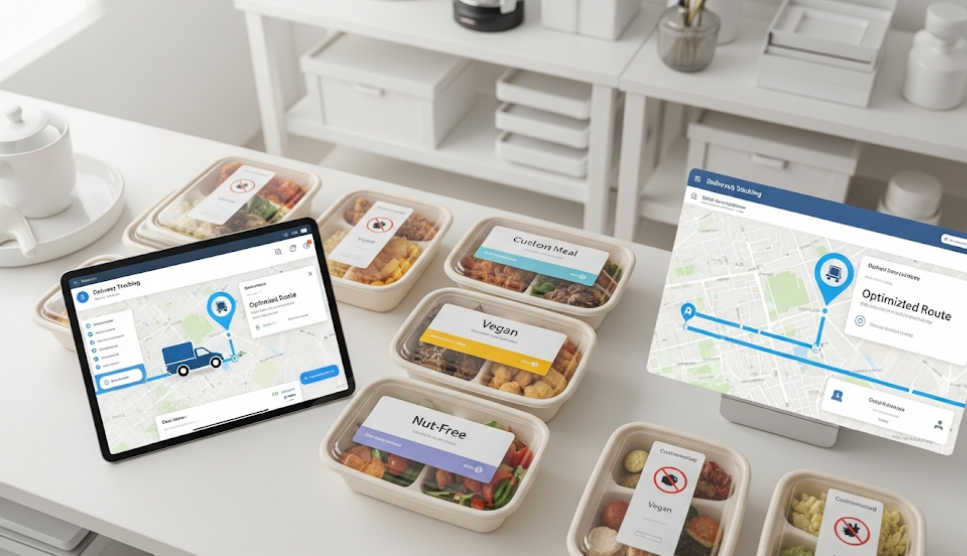
Ingredient tracking, cost insights, and predictive purchasing.Delivery route optimization
Auto-assign drivers and build efficient routes with real-time tracking.CRM & event management tools
Manage leads, proposals, client profiles, and returning contracts.White-label branded client portals
For bookings, menu approval, payments, and updates.AI-powered analytics
Insights on costs, event performance, menu profitability, and customer trends.
Sprwt demonstrates how 2026-ready catering software can unify kitchen operations, client experience, and business growth through automation and data.
FAQs
1. What is catering management software used for?
It manages your entire catering operation - from event scheduling and menu planning to inventory control, billing, deliveries, and customer communication - in one unified system.
2. How does catering software improve efficiency?
Automating repetitive tasks, centralizing event details, optimizing delivery routes, and providing real-time staff coordination dramatically reduces errors and workload.
3. What are the must-have features in 2026?
AI forecasting, inventory automation, branded client portals, multi-location management, CRM, analytics dashboards, and delivery routing.
4. How much does catering software cost?
Costs vary by size and needs. Most providers offer monthly subscriptions, volume-based pricing, or enterprise packages. ROI is typically achieved through reduced waste and fewer admin hours.
5. Is catering software suitable for small catering companies?
Yes, modern platforms scale up or down based on event volume and team size, making them ideal for small and growing caterers.
6. Can catering software integrate with delivery and accounting tools?
Most 2026-ready platforms integrate with delivery apps, accounting tools, POS systems, and CRMs for a fully connected workflow.
Conclusion
2026 is the year catering becomes a data-driven industry. Automation, analytics, and smart technology now determine how efficiently you operate and how fast you can scale.
Catering software empowers you to manage events with precision, reduce waste, streamline logistics, and deliver exceptional customer experiences. Whether you’re coordinating a single event or thousands, the right technology gives you control, visibility, and consistency.
Catering businesses that adopt modern tools today will lead the industry tomorrow - delivering better food, faster, and smarter with catering management software built for 2026 and beyond.


Comments
Post a Comment