How Catering Software Is Transforming Events, Delivery, and Client Management in 2026
The catering industry is evolving faster than ever before. In 2026, events are more hybrid, clients are more tech-savvy, and food service operations have become deeply digital. Whether managing large-scale weddings, corporate events, or recurring meal deliveries, success now depends on precision, automation, and speed.

Manual spreadsheets, phone-based bookings, and disconnected systems no longer cut it. Clients expect real-time updates, transparent billing, and tailored menus - all managed seamlessly. That’s where catering software comes in.
Catering software connects kitchen, sales, logistics, and customer management into one integrated platform. It replaces chaos with clarity, helping caterers deliver better experiences while saving time and reducing costs.
In this blog, we’ll explore how catering business software is reshaping event management, delivery workflows, and client communication - and why it’s the essential tool for catering success in 2026.
Why 2026 Is a Turning Point for Catering Businesses
The past few years have permanently changed how the catering world operates. With the post-pandemic shift to hybrid and on-demand events, the industry faces more complexity - and more opportunity - than ever.
Here’s why 2026 marks a major transformation:
Increased event complexity: Multi-day corporate events, live-streamed hybrid conferences, and themed private parties now require intricate scheduling and coordination.
Client expectations have evolved: People expect personalized menus, digital proposals, and live tracking of catering deliveries.
Rising operational costs: Inflation, ingredient variability, and staff shortages make efficiency vital.
Real-time visibility is essential: Business owners need instant insight into bookings, payments, and kitchen performance.
Without automation and catering management tools, even experienced caterers risk losing clients to faster, smarter competitors.
Catering software ensures no event is missed, no delivery delayed, and no customer left uninformed - transforming traditional operations into tech-enabled experiences.
What Catering Software Actually Does
The best catering software replaces fragmented systems with one connected platform that handles every stage of a catering workflow - from lead capture to final delivery.
Here’s how it works:
Event Management - Manage bookings, client requests, guest counts, and timelines all from a single dashboard. No more double-bookings or missed details.
Order & Inventory Tracking - Track ingredient usage in real time, sync with supplier data, and automate purchase orders.
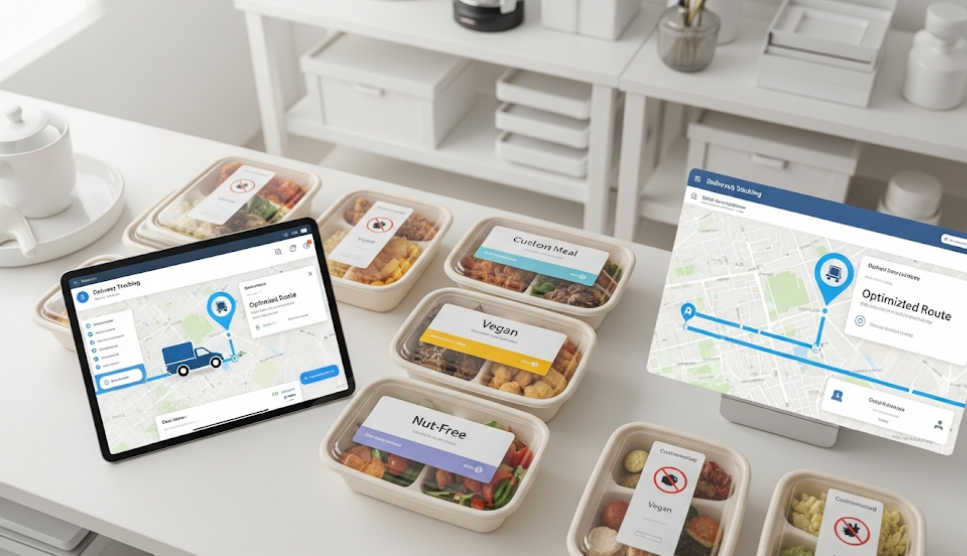
Menu Customization - Build event-specific menus, apply dietary filters (vegan, gluten-free, nut-free), and automate pricing.
Delivery Scheduling - Assign drivers, optimize routes, and provide live tracking to ensure on-time deliveries.
CRM & Lead Tracking - Manage client communication, follow-ups, and proposals; convert inquiries into confirmed bookings.
Staff Scheduling - Assign chefs, servers, and coordinators efficiently; avoid understaffing or conflicts.
Billing & Payment Processing - Generate quotes, accept deposits, and collect payments digitally.
Reporting & Analytics - Track profit margins, customer retention, and event performance in real time.
White-Label Branding - Create a branded booking and payment portal that reflects your company’s identity.
With kitchen management software for catering, teams gain full visibility from prep to plate - no more guesswork, just seamless coordination.
Key Features That Define the Best Catering Software in 2026
The next generation of catering business software doesn’t just organize - it predicts, optimizes, and scales your business intelligently.
AI-driven Forecasting
Predict demand and ingredient needs with precision. AI analyzes event history, seasonality, and client trends to anticipate supply requirements - reducing waste and surprise shortages.
Integrated Marketing Tools
Automate client engagement with event reminders, follow-up campaigns, and personalized offers. Keep your brand top-of-mind year-round.
Dynamic Dashboards
Monitor cost breakdowns, kitchen performance, and event schedules at a glance. Visual insights make management decisions easier and faster.
Multi-location Support
Perfect for catering groups and franchises - manage multiple venues or kitchen hubs in real time through one system.
Mobile Access
Caterers on the go can access event details, inventory updates, and team assignments from any device.
Customer Portals
Empower clients to view event status, approve proposals, and make payments online - improving transparency and trust.
Together, these features turn catering automation from a nice-to-have into a business necessity.
How Catering Software Improves Efficiency and Profitability
Catering success in 2026 is measured not just by taste but by how efficiently a business can operate.

Here’s how the right software drives measurable ROI:
1. Time Savings
Automation reduces administrative workload by up to 50%. Tasks like generating invoices, assigning staff, or updating menus take minutes instead of hours.
2. Reduced Waste
Inventory forecasting minimizes overbuying and spoilage, leading to cleaner, more sustainable operations.
3. Error Reduction
With centralized data, you eliminate double-bookings, missed invoices, and forgotten deliveries.
4. Better Cash Flow
Faster billing and integrated payment systems ensure consistent cash flow and fewer overdue payments.
5. Stronger Client Retention
With transparent updates, branded portals, and professional communication, clients trust and rebook more frequently.
Catering businesses that have implemented catering management tools report smoother operations, fewer complaints, and higher profit margins.
2026 Technology Trends Shaping Catering Software
The future of catering is automated, data-driven, and intelligent. Let’s explore the key technology trends redefining catering management in 2026:
1. AI & Predictive Analytics
AI models analyze booking patterns and suggest staffing, purchasing, and menu changes to maximize efficiency.
2. Cloud-Based Operations
Teams across multiple locations can collaborate seamlessly, accessing schedules, invoices, and menus anytime, anywhere.
3. Automation Integrations
Modern platforms connect POS systems, accounting software, CRMs, and delivery apps - creating a unified catering ecosystem.
4. Sustainability Tracking
Track food waste, carbon footprint, and packaging metrics. These insights not only reduce waste but also appeal to eco-conscious clients.
5. IoT & Smart Kitchens
Connected kitchen devices communicate directly with software, updating prep progress, temperature logs, and ingredient use in real time.
These trends are shaping a new era of catering business software - one built for flexibility, intelligence, and sustainability.
Catering Software Pricing in 2026: What to Expect
Pricing models for catering software in 2026 vary depending on scale, integrations, and features. Here’s what businesses can expect:
Common Pricing Models
Subscription-Based (Monthly/Annual): Ideal for small to mid-sized caterers; predictable costs and easy scalability.
Usage-Based (Per Event or Location): Perfect for seasonal or event-based businesses.
Enterprise Custom Plans: Designed for large-scale, multi-location operations requiring deep customization.
Factors That Influence Cost
Number of users or locations
Volume of monthly events
Required integrations (CRM, accounting, delivery tools)
Onboarding or training needs
Storage and analytics capabilities
ROI Snapshot
For most caterers, savings far outweigh the cost:
30-40% reduction in manual admin hours
15-25% lower ingredient waste
Faster invoicing = stronger cash flow
Investing in automation is an investment in operational resilience.
How Sprwt Fits Into the Future of Catering Software
Among the many platforms shaping the 2026 catering landscape, Sprwt stands out for its integrated approach to catering and meal prep operations.
Sprwt provides a unified system for catering management, delivery, and kitchen operations - all within a single cloud-based platform.
Core Capabilities Include:
AI forecasting for ingredient demand and event planning.
Automated batch cooking reports for efficient large-scale production.
Built-in delivery routing for drivers and real-time order tracking.
Integrated POS and CRM tools for seamless client management.
White-label branding so caterers can deliver fully branded customer experiences.
Built for scalability, Sprwt helps caterers manage both one-time events and recurring corporate orders effortlessly. With advanced analytics, it gives managers visibility into performance, profitability, and sustainability - ensuring businesses stay future-ready for 2026 and beyond.
FAQs
1. What does catering software do?
Catering software automates event scheduling, inventory, delivery, and client management in one integrated system - reducing manual work and improving efficiency.
2. Is catering software suitable for small businesses?
Yes. Modern catering software offers flexible pricing plans for small and growing businesses, helping them scale without complexity.
3. Can catering software handle multiple events at once?
Absolutely. Event dashboards and smart scheduling tools allow you to manage multiple bookings, menus, and deliveries simultaneously without overlap.
4. How much does catering software cost in 2026?
Most plans range from affordable monthly subscriptions to enterprise pricing, depending on user count, integrations, and scale. The ROI typically outweighs the cost within months.
5. What are the must-have features in 2026?
AI forecasting, cloud-based management, CRM integration, and white-label client portals are key features defining modern catering platforms.
6. Can I use one system for both catering and meal prep?
Yes. Platforms like Sprwt combine catering and meal prep operations - perfect for businesses managing both corporate events and weekly meal plans.
Conclusion
By 2026, catering businesses that thrive will be those embracing automation, analytics, and AI. The days of juggling spreadsheets and paper invoices are over - efficiency, accuracy, and customer experience now define success.
Modern catering software streamlines every stage of the process, from kitchen prep to client delivery, ensuring smoother operations and stronger profitability.
Catering businesses that embrace technology today are building the foundations for tomorrow’s growth - powered by smart, scalable catering management software designed for 2026 and beyond.


Comments
Post a Comment