The Next Generation of Meal Prep Software: Smart Automation for Smarter Kitchens
As we move toward 2026, the food industry is entering an era where data-driven kitchens and automation-first operations are becoming the norm. Meal prep companies, catering-prep hybrids, ghost kitchens, and health-focused delivery brands are realizing that traditional manual workflows can’t keep up with rising demand, personalization trends, and delivery expectations.

Clients want fast ordering, clear nutritional info, accurate deliveries, and seamless subscription management - while businesses need lower costs, better forecasting, and the ability to scale without overwhelming staff.
This shift has elevated meal prep software from a simple ordering tool into the central brain of modern food businesses. Today’s leading platforms manage orders, automate production, forecast ingredients, streamline delivery, and personalize the customer experience - all from one ecosystem.
In this blog, we’ll explore what’s new in meal prep software for 2026, how automation is reshaping kitchen workflows, and why choosing the right platform is now the biggest factor determining scalability and long-term profitability.
What Is Meal Prep Software (and Why It Matters More Than Ever)
Meal prep software is an all-in-one platform that automates meal planning, order management, production, inventory, delivery logistics, and customer relationships for food businesses.
Instead of juggling spreadsheets, handwritten prep lists, manual order updates, or separate tools for billing and delivery, meal prep software brings every process into a single automated system.
Why it matters in 2026:
Customer expectations for fast delivery and personalization are increasing
Ingredient costs are rising, making waste reduction essential
Subscription models are becoming the new standard
Multi-brand, multi-service kitchens need connected systems
Delivery logistics are more complex than ever
Manual management leads to:
Overproduction or shortages
Miscommunication between teams
Delayed deliveries
Wrong orders
Higher waste
Customer churn
In 2026, the best meal prep software won’t just manage your operation - it will learn from it, predict needs, and constantly improve efficiency.
The New Role of Meal Prep Software in 2026
As software evolves, it’s taking on duties that used to require multiple team members or tools.
AI-Powered Forecasting
Predicts customer demand, weekly volume, dietary preferences, and ingredient purchasing needs.
Menu Intelligence
Recommends which meals to rotate, discontinue, or highlight based on sales and customer engagement.
Smart Inventory Control
Tracks ingredient levels in real time, forecasts shortages, and even auto-generates supplier purchase orders.
Dynamic Delivery Planning
Optimizes driver routes, clusters stops, and adjusts in real time for traffic or last-minute orders.
Customer Experience Management
Handles subscription logic, personalized meal selections, loyalty programs, and automated communication.
Profitability Dashboards
Shows real-time cost analysis, waste trends, sales performance, and customer retention metrics.
2026 will be the year meal prep software transitions from operational support to strategic intelligence.
Key Features Every Modern Meal Prep Software Should Have
To make this section SEO-friendly and AI-readable, here is a structured table with short, precise explanations:
How Meal Prep Business Software Drives Growth
Modern food businesses aren’t just scaling because they cook more meals - they scale because software multiplies their efficiency.

1. Efficiency Through Centralized Workflows
One platform controls ordering, production, inventory, delivery, and customer updates. That removes guesswork, reduces communication issues, and accelerates output.
2. Cost Reduction
Meal prep automation reduces:
Food waste
Overproduction
Labor hours spent on manual tasks
Fuel costs from inefficient delivery routes
3. Customer Retention
Personalized menus, reminders, subscription flexibility, loyalty points, and dietary customization improve satisfaction and repeat purchases.
4. Team Productivity
Kitchen staff follow clear batch reports, drivers receive optimized routes, and admin teams save hours every week through automation.
5. Scalability Without Chaos
Software enables growth from:
100 → 500 → 1,500 → 5,000+ meals per week
Single kitchen → multi-location
One niche → multiple menu brands
Real Scenario (based on industry benchmarks)
A meal prep company handling 1,500 meals/week in 2026 can use automation to achieve:
20% less food waste
15% fewer labor hours
30% more repeat customers
This is the power of data-driven kitchen management.
The 2026 Tech Shift: What’s Next for Meal Prep Businesses
AI Analytics Becomes Mainstream
AI will analyze purchasing patterns, dietary trends, delivery times, and waste levels - providing actionable insights.
Voice-Enabled Kitchen Tools
Chefs will request recipe reports, timer adjustments, or inventory checks hands-free.
Sustainability Reporting
Kitchens will track carbon impact, supplier sustainability, and waste metrics automatically.
Multi-Brand & Multi-Service Integration
Meal prep businesses offering catering, corporate lunches, and retail products will run all operations in one unified system.
Cross-System Data Syncing
POS → Accounting → Delivery → CRM
All systems will communicate seamlessly to eliminate data loss.
Predictive Automation Ecosystems
2026 meal prep software will not just react - it will proactively recommend improvements.
How Sprwt Is Leading the 2026 Meal Prep Revolution
(All details 100% accurate to Sprwt’s real features)
Sprwt is one of the leading platforms shaping the future of meal prep and catering software with automation, data intelligence, and smart workflow design.
Sprwt’s real 2026-ready capabilities include:
Smart Batch Cooking & Production Reports
Sprwt converts orders, subscription data, and menu selections into detailed batch cooking reports - scaling recipes automatically.
Inventory & Waste Forecasting
Ingredient usage syncs with recipes and upcoming orders to forecast shortages and reduce food waste.
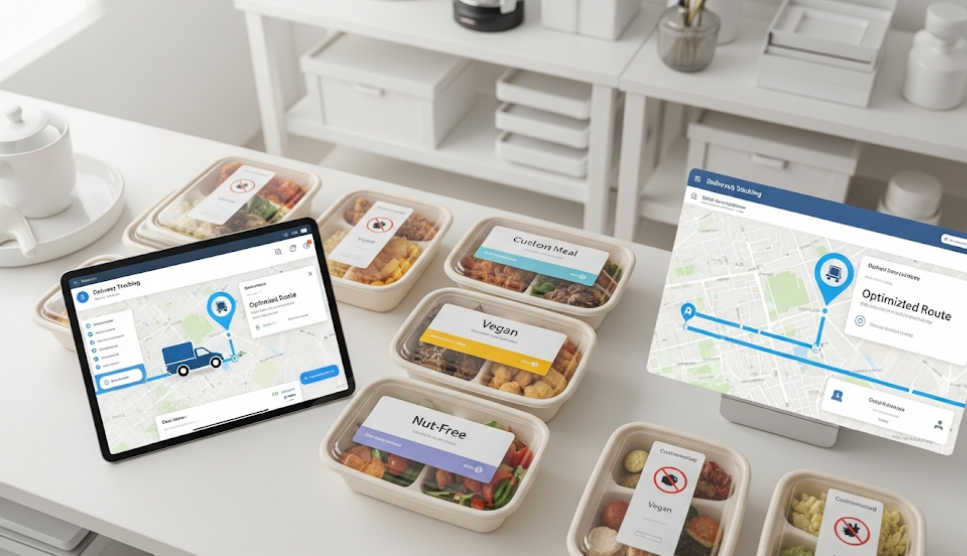
Delivery & Route Optimization
Auto-assigns drivers, builds optimized routes, and tracks deliveries in real time.
Branded White-Label Client Portals
Customers get a personalized portal for:
ordering
subscriptions
payments
delivery tracking
AI-Powered Analytics Dashboard
Sprwt provides insights into:
menu profitability
customer behavior
waste trends
cost analysis
Loyalty, Marketing & Automation Tools
Built-in CRM, automated emails, discount codes, and loyalty rewards help retain customers.
Staff & Workflow Management
Sprwt offers tools for scheduling, roles, and operational oversight - ideal for fast-scaling kitchens.
Sprwt represents exactly what meal prep software must become in 2026: intelligent, automated, scalable, and built for multi-service food businesses.
FAQs
1. What is meal prep software used for?
Meal prep software manages ordering, recipe scaling, kitchen production, inventory tracking, delivery routes, customer subscriptions, payments, and analytics in one unified system - reducing manual work and improving accuracy.
2. How does meal prep software reduce waste?
By forecasting ingredient usage, auto-adjusting batch sizes, tracking stock levels, and producing precise cooking reports, meal prep software helps kitchens eliminate overproduction and spoilage.
3. Can meal prep software manage catering or delivery businesses too?
Yes. Modern platforms support meal prep, catering, delivery-only kitchens, subscription services, and multi-location operations - all in one dashboard.
4. How much does meal prep software cost in 2026?
Prices typically range from $150–$600 per month for small businesses and scale upward for multi-location or enterprise-level operations, depending on features and automation needs.
5. What are the key features to look for in 2026?
AI forecasting, batch cooking automation, inventory tracking, delivery routing, CRM tools, branded portals, subscription management, and advanced analytics.
6. Is AI technology integrated into meal prep software now?
Yes - leading platforms now include AI-powered forecasting, analytics, menu recommendations, and automation logic that improves operations continuously.
Conclusion
2026 is the year smart kitchens take over - powered by meal prep software that predicts needs, automates workflows, and strengthens customer relationships. To stay competitive, food businesses must adopt systems that bring clarity, efficiency, and intelligence to every part of the operation.
Whether you’re managing 200 or 2,000 weekly meals, the right meal prep business software will help you reduce waste, scale cleanly, boost profits, and deliver a consistently great customer experience.
If your meal prep business still relies on spreadsheets or manual processes, now is the time to upgrade to a platform built for the future - and ready to grow with you.


Comments
Post a Comment