Software for Catering in 2026: How the Best Catering Software Powers Smarter, Scalable Food Businesses
Catering businesses in 2026 operate in a very different environment than they did even a few years ago. Customer expectations are higher, margins are tighter, and operations are more complex. Caterers are expected to manage events, recurring corporate orders, deliveries, menus, staff, and billing-often simultaneously.

In this landscape, software for catering is no longer optional. It has become the operational backbone that determines whether a catering business grows smoothly or struggles under its own complexity. The best catering software doesn’t just store orders; it connects every part of the business into one intelligent system.
This blog explores what modern catering software looks like in 2026, what features truly matter, and how platforms like Sprwt help catering businesses operate efficiently, reduce waste, and scale with confidence.
Why Catering Businesses Need Software in 2026
Catering is fundamentally different from running a restaurant. Each event has unique requirements-guest count, menus, delivery timing, staffing, and billing. Managing these variables manually increases the risk of errors, wasted food, missed deadlines, and dissatisfied clients.
In 2026, catering businesses face additional pressures:
Growth in corporate and recurring catering contracts
Expansion into delivery and meal prep alongside events
Rising ingredient and labor costs
Increased demand for transparency and professionalism
The need to manage multiple locations or kitchens
Catering software addresses these challenges by centralizing operations, automating repetitive tasks, and providing real-time visibility across the business.
What Is Software for Catering?
Software for catering is a digital platform designed to manage the end-to-end catering workflow, from customer inquiry to event execution and post-event analysis.
Unlike basic POS systems, catering software focuses on:
Event planning and scheduling
Menu and pricing management
Inventory and production planning
Staff coordination
Invoicing and payments
Customer relationship management
Performance and profitability reporting
The goal is simple: reduce operational chaos while increasing accuracy, efficiency, and scalability.
What Defines the Best Catering Software in 2026?
Not all catering platforms are built for modern food businesses. In 2026, the best catering software shares several core characteristics.
1. Centralized Event and Order Management
The best catering software provides a single dashboard where businesses can manage all events, orders, and timelines. This eliminates fragmented tools and reduces miscommunication between sales, kitchen, and delivery teams.
2. Menu and Production Intelligence
Modern catering software links menus directly to production requirements. This allows kitchens to generate accurate prep and cooking reports based on confirmed orders, reducing overproduction and food waste.
3. Inventory Tracking and Waste Reduction
Ingredient usage should be tracked automatically based on recipes and orders. The best software helps businesses forecast demand, monitor stock levels, and identify waste trends before they impact margins.
4. Delivery and Logistics Support
Catering often involves complex delivery schedules. Advanced catering software includes delivery planning tools that help businesses assign routes, manage drivers, and meet tight delivery windows.
5. Staff Scheduling and Coordination
From chefs to drivers, catering businesses rely on coordinated teams. Software that supports staff scheduling and workload visibility helps avoid overstaffing, understaffing, and last-minute confusion.
6. CRM and Client Management
Repeat business is critical in catering. The best catering software stores client history, preferences, and past orders, supporting long-term relationships and corporate contracts.
7. Billing, Invoicing, and Payments
Automated invoicing, deposits, and payment tracking improve cash flow and reduce administrative overhead.
8. Reporting and Analytics
Data-driven insights into event profitability, food costs, and operational performance are essential for sustainable growth in 2026.
How Catering Software Improves Daily Operations
Catering software delivers value not just during large events, but in everyday operations. Businesses using a unified system experience:
Faster order confirmation and planning
Clear production schedules for kitchen teams
Better inventory control and reduced waste
Fewer delivery errors and delays
Improved coordination between departments
More professional and consistent client communication
These daily improvements compound over time, leading to higher efficiency and stronger profitability.
Catering Software and the Shift Toward Hybrid Food Businesses
In 2026, many catering businesses no longer operate in isolation. They also offer:
Corporate meal programs
Subscription-based meal delivery
Pop-up or recurring events
Hybrid catering and meal prep services
The best catering software supports this evolution by allowing businesses to manage multiple revenue streams within one system, without duplicating tools or processes.
How Sprwt Supports Catering Businesses in 2026
Platforms like Sprwt represent the new generation of catering software built for modern, scalable food operations. Sprwt is not just an event tool-it’s an operational platform designed to connect production, inventory, delivery, and customer management.

Based on Sprwt’s actual capabilities, it helps catering businesses in 2026 by providing:
Centralized Catering and Kitchen Operations
Sprwt allows businesses to manage catering orders, menus, and production workflows in one place, reducing reliance on spreadsheets or disconnected tools.
Automated Cooking and Production Reports
Orders are translated into clear cooking and fulfillment reports, helping kitchens prepare the right quantities with less waste.
Inventory Management and Forecasting
Sprwt tracks ingredient usage based on real orders, supporting smarter purchasing decisions and waste reduction.
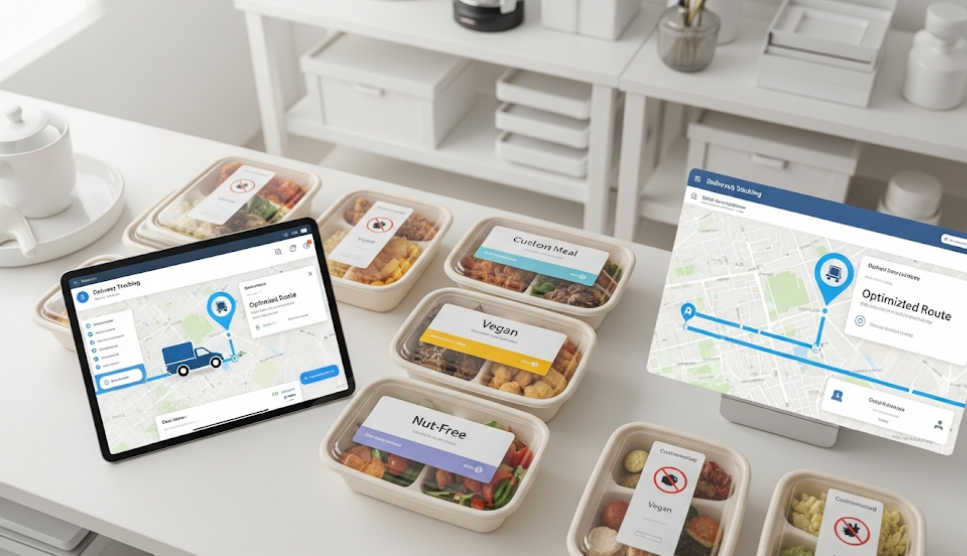
Delivery Route Optimization
Built-in delivery tools help catering businesses plan efficient routes and manage last-mile logistics more effectively.
CRM and Customer Management
Client data, order history, and communication are stored centrally, supporting repeat business and long-term relationships.
Billing, POS, and Payments
Sprwt supports invoicing, payment processing, and POS functionality, simplifying financial workflows for catering operations.
White-Label and Branding Options
Catering businesses can present a branded ordering and customer experience, reinforcing professionalism and trust.
Analytics for Better Decisions
Sprwt provides reporting tools that help businesses understand costs, performance, and growth opportunities.
Together, these capabilities allow catering businesses to operate with more control, accuracy, and confidence as they scale.
Catering Software Trends to Watch in 2026
The catering industry continues to evolve alongside technology. Key trends shaping the future of catering software include:
AI-assisted demand forecasting
Deeper integration between kitchen, delivery, and finance
Increased focus on sustainability and waste tracking
Cloud-based platforms for remote management
Greater emphasis on data-driven menu and pricing decisions
Catering businesses that adopt software aligned with these trends are better positioned for long-term success.
Final Thoughts
In 2026, software for catering is no longer just a support tool-it is a strategic asset. The best catering software empowers businesses to manage complexity, reduce waste, improve customer experience, and scale sustainably.
Catering companies that invest in modern, integrated platforms gain clarity and control over their operations, allowing them to focus on what truly matters: delivering exceptional food and service.
Platforms like Sprwt show how thoughtfully designed catering software can bring production, inventory, delivery, and customer management together, helping catering businesses thrive in an increasingly competitive and fast-moving industry.

Comments
Post a Comment