Catering Management Software in 2026: What Restaurants and Caterers Really Need
Catering has become one of the most important revenue streams for restaurants and independent food businesses. Corporate lunches, weddings, private events, meal programs, and hybrid dine-in + catering models are now common across the industry. As demand grows, so does operational complexity.
Managing catering operations alongside traditional restaurant service requires more than culinary skill. It demands coordination between kitchen teams, delivery staff, event managers, and finance departments. Spreadsheets, paper invoices, and disconnected systems often create confusion, delays, and unnecessary waste.

This is why catering management software has become essential. In 2026, the best catering software is not simply a digital order book-it is an integrated operational system that connects events, production, inventory, delivery, and billing into one centralized platform.
This article explores what restaurants and caterers truly need from catering management software today, and what defines the best catering software for scalable food operations.
The Evolving Role of Catering in Modern Restaurants
Restaurants no longer rely solely on dine-in revenue. Catering provides:
Larger ticket orders
Recurring corporate clients
Brand exposure at events
Opportunities for off-site expansion
However, catering operations differ significantly from standard restaurant service.
Catering requires:
Managing large guest counts
Coordinating prep days in advance
Customizing menus
Handling off-site logistics
Tracking deposits and invoices
Aligning staff schedules with event timelines
Without structured systems, these moving parts quickly overwhelm teams.
What Is Catering Management Software?
Catering management software is designed to centralize and organize event-based food operations. It allows restaurants and catering businesses to manage orders, events, production schedules, delivery logistics, and client communication within a single system.
Instead of relying on multiple disconnected tools, catering management software brings together:
Event scheduling
Order tracking
Menu planning
Inventory control
Delivery coordination
Billing and payments
Customer relationship management
In 2026, integrated systems are no longer optional-they are foundational to efficiency.
Why Restaurants Need Catering Management Software
Restaurants that expand into catering often underestimate the operational differences between dine-in and event service.
1. Simultaneous Operations
A restaurant may be serving dinner service while preparing for a 200-person corporate lunch the next day. Without structured software, coordinating prep, staffing, and inventory becomes challenging.
2. Large Off-Site Orders
Catering orders require detailed preparation timelines and packing coordination. Catering software helps align kitchen output with delivery schedules.
3. Custom Menu Requests
Dietary preferences, portion changes, and event-specific adjustments must be tracked clearly to prevent errors.
4. Deposit and Payment Tracking
Catering billing often involves deposits, milestone payments, and final invoices. Structured billing systems reduce confusion and improve cash flow.
Catering management software helps restaurants maintain operational clarity across both dine-in and event-based workflows.
Core Operational Needs of Catering Businesses

To scale successfully, catering businesses must address several critical operational areas.
Event Scheduling and Management
Managing multiple events across dates and venues requires centralized scheduling tools. The best catering software provides visibility into:
Event dates
Guest counts
Menu selections
Special instructions
Delivery details
Centralization reduces miscommunication.
Menu Planning and Recipe Consistency
Catering menus must remain consistent across large guest counts. Software that links recipes to event quantities helps ensure:
Accurate portion scaling
Ingredient forecasting
Reduced preparation errors
Consistency builds trust and repeat business.
Inventory Tracking and Cost Control
Food costs directly affect profit margins. Catering management software helps:
Track ingredient usage
Reduce over-purchasing
Improve purchasing accuracy
Minimize food waste
Linking confirmed orders to inventory planning supports smarter cost management.
Delivery Coordination
Delivery is often the most sensitive part of catering operations. Late arrivals can damage a reputation.
The best catering software supports:
Coordinated preparation and dispatch timelines
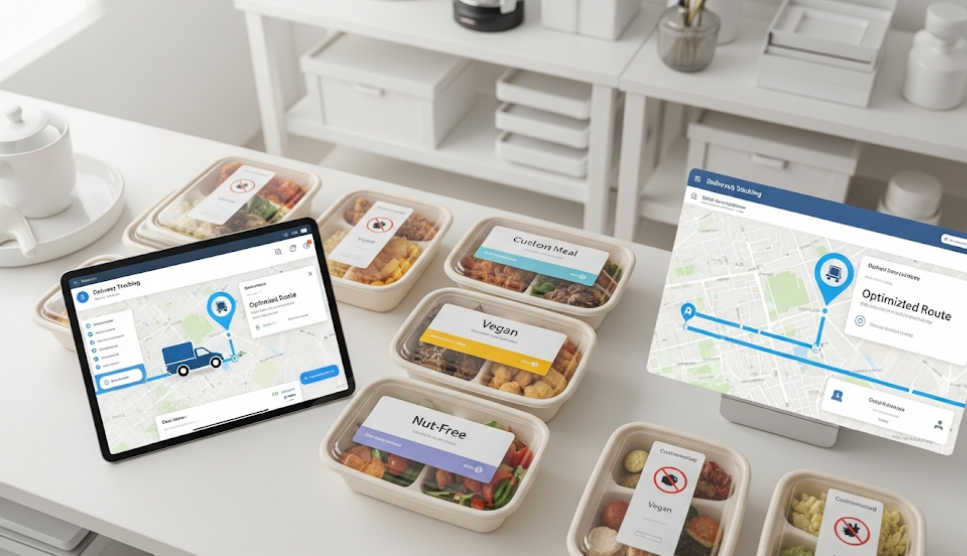
Route optimization
Clear delivery assignments
Multiple delivery locations
Integrated delivery planning reduces stress on event days.

Staff Scheduling
Events require flexible staffing. Catering software helps coordinate:
Chef assignments
Service staff scheduling
Driver planning
Avoidance of double-booking
Clear staff coordination improves execution quality.
Client Communication and CRM
Repeat clients are critical for catering growth. Catering management software should include:
Client contact storage
Event history
Order preferences
Communication records
Structured client management supports long-term relationships.
What Makes the Best Catering Software?
The term “best catering software” is often used broadly, but operational excellence defines true value. In 2026, the best catering software should include the following capabilities:
Centralized Event Dashboard
A unified view of all upcoming events reduces confusion and improves coordination across departments.
Automated Production and Cooking Reports
Production reports convert orders into preparation plans, reducing manual calculations and errors.
Inventory Tracking and Waste Reduction
Real-time inventory visibility supports cost control and sustainability.
Delivery Route Optimization
Efficient route planning reduces travel time and improves punctuality.
Subscription and Recurring Order Support
Many catering businesses now offer recurring meal programs. Software should handle both one-time and recurring workflows.
CRM and Customer Management
Client retention improves when order history and preferences are easily accessible.
POS and Billing Integration
Integrated payment processing and invoicing streamline financial workflows.
Reporting and Analytics Tools
Data visibility enables better decision-making and long-term planning.
White-Label Branding Capabilities
Customer-facing interfaces should reflect the business’s brand identity.
These features collectively support scalable operations.
Supporting Hybrid Catering and Meal Prep Operations
Many restaurants and caterers now operate hybrid models:
Traditional event catering
Corporate recurring lunches
Subscription meal programs
Meal prep services
Managing these models separately creates operational silos. Integrated catering management software helps businesses manage:
One-time and recurring orders
Shared inventory
Unified reporting
Coordinated delivery routes
Flexibility is essential for modern food businesses.
Reducing Costs and Improving Margins
Scalability is not just about revenue-it is about profitability.
Catering management software improves margins by:
Reducing overproduction
Improving ingredient forecasting
Automating production calculations
Optimizing delivery routes
Providing cost visibility through analytics
Data-backed decisions replace guesswork.
Catering Management Software in 2026
In 2026, operational expectations continue to rise.
Clients expect:
On-time delivery
Accurate guest count execution
Transparent billing
Clear communication
Restaurants and caterers require:
Automation to reduce manual workload
Integrated systems across departments
Real-time visibility into operations
Scalability without operational chaos
Catering management software serves as operational infrastructure, supporting both growth and consistency.
Frequently Asked Questions
What is catering management software used for?
Catering management software helps businesses manage events, orders, menu planning, inventory tracking, delivery coordination, billing, and client relationships within a centralized system.
What makes the best catering software?
The best catering software integrates event management, production planning, inventory tracking, delivery optimization, CRM, billing, and analytics into one cohesive platform.
Can catering management software support restaurants?
Yes. Restaurants offering catering services use catering software to coordinate off-site events alongside daily restaurant operations.
How does catering software reduce food waste?
By linking event orders to ingredient requirements and production planning, catering software helps reduce over-purchasing and excess preparation.
Can catering software manage multiple events at once?
Yes. Catering management software centralizes schedules and order details, allowing businesses to manage overlapping events more efficiently.
Does catering software support delivery logistics?
Many platforms include delivery coordination tools, including route optimization and dispatch scheduling.
Is catering management software suitable for small businesses?
Yes. Structured systems can help small caterers improve organization and scale gradually without increasing complexity.
Conclusion
In 2026, catering success depends on structured operations. As restaurants and catering businesses expand, manual coordination becomes inefficient and risky. Catering management software centralizes workflows, improves visibility, and reduces operational strain.
The best catering software integrates event management, production planning, inventory tracking, delivery coordination, billing, and customer management into one cohesive system.
Platforms such as Sprwt support catering businesses by offering centralized order and event management, automated production and cooking reports, inventory tracking and waste reduction tools, delivery route optimization, subscription and recurring order management, CRM features, POS and billing integration, white-label branding, reporting dashboards, and support for both catering and meal prep workflows.
Structured systems like these allow catering businesses and restaurants to scale with confidence while maintaining operational clarity.


Comments
Post a Comment