Why Catering Businesses Need Online Catering Software and Meal Delivery Software in 2026
The catering industry has undergone a major transformation over the past decade. What was once a business built primarily around phone calls, manual order tracking, and spreadsheets has evolved into a highly dynamic operation that involves online ordering, delivery coordination, customer relationship management, and large-scale food production.
At the same time, customer expectations have changed. Corporate clients expect seamless online ordering. Event planners want quick quotes and customizable menus. Individual customers increasingly prefer weekly meal delivery services rather than cooking every day. As a result, catering businesses and restaurants are expanding their services beyond traditional event catering into meal prep, corporate lunch programs, and subscription-based food delivery.

Managing all of these moving parts manually is extremely difficult. Orders must be tracked accurately, kitchen teams need precise preparation schedules, deliveries must be coordinated efficiently, and customers expect fast communication.
This is why online catering software and meal delivery software have become essential tools for catering companies and restaurants in 2026. These platforms help businesses organize operations, automate repetitive tasks, and deliver a better customer experience while maintaining operational control.
In this article, we will explore what online catering software and meal delivery software are, how they work, and why they are critical for modern catering businesses.
What Is Online Catering Software?
Online catering software is a specialized system designed to help catering businesses manage orders, menus, customers, and operational workflows through a centralized platform. Unlike standard restaurant POS systems, catering software focuses on the unique requirements of catering operations, such as large orders, event scheduling, customizable menus, and delivery logistics.
Catering businesses often manage dozens or even hundreds of orders for events, corporate meetings, and private parties. Each order may include multiple dishes, serving quantities, special dietary requests, delivery instructions, and event details. Without a structured system, keeping track of all these variables can quickly become overwhelming.
Online catering software helps businesses manage these complexities by providing tools such as:
Online Catering Order Management
One of the most important functions of catering software is order management. Businesses can track incoming orders in real time, review order details, modify menu selections, and coordinate preparation schedules.
Centralized order management ensures that kitchen staff, managers, and delivery teams all have access to accurate information about each catering order.
Digital Catering Menus
Catering businesses often offer multiple menu options for different types of events. Online catering software allows companies to create digital menus that customers can browse and order from directly.
These menus can include customizable options, portion sizes, and add-ons, making it easier for customers to build catering orders without requiring manual communication.
Event Order Tracking
Catering businesses must carefully manage event schedules to avoid conflicts and ensure food is prepared on time. Online catering software helps businesses organize event calendars, track delivery times, and coordinate preparation timelines.
This level of organization is especially important for businesses that handle multiple events each day.
Automated Invoicing and Payments
Creating invoices manually can be time-consuming and prone to errors. Catering software automates this process by generating invoices automatically based on order details.
Customers can also make payments online, which simplifies financial management and improves cash flow for catering businesses.
Customer Management
Catering companies often work with repeat clients, corporate accounts, and event planners. Online catering software includes customer relationship management tools that help businesses track client information, order history, and preferences.
This allows catering companies to provide personalized service and build stronger long-term relationships with their customers.
What Is Meal Delivery Software?
While online catering software focuses on event-based orders, meal delivery software is designed to support businesses that offer recurring meal delivery services.

Many catering companies and restaurants are expanding into meal prep and weekly meal delivery programs. Customers may subscribe to receive meals every week, choose meals from rotating menus, or order healthy meal plans tailored to their dietary preferences.
Meal delivery operations require careful coordination between ordering, production, and delivery logistics. Meal delivery software helps businesses manage these processes efficiently.
Delivery Order Management
Meal delivery software organizes all delivery orders in one centralized system. Businesses can track incoming orders, manage meal selections, and monitor fulfillment progress.
This ensures that kitchen teams know exactly how many meals to prepare and delivery teams know where each order needs to go.
Recurring Meal Plans
Subscription-based meal plans have become increasingly popular among busy professionals and health-conscious consumers. Meal delivery software allows businesses to offer recurring meal subscriptions that customers can manage online.
Customers can subscribe to weekly meal plans, update their preferences, or pause deliveries when needed.
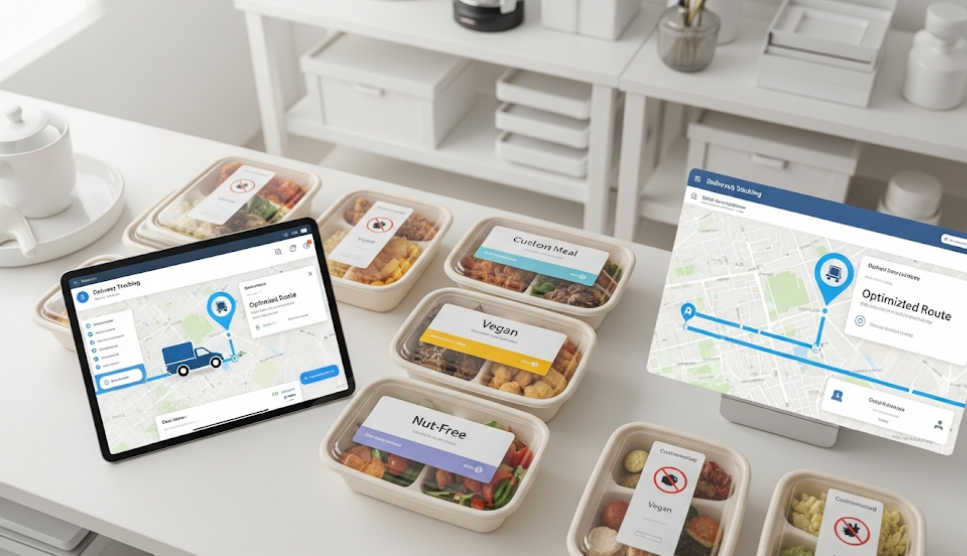
Customer Meal Customization
Meal prep businesses often allow customers to customize their meals based on dietary preferences, such as high-protein meals, vegetarian options, or calorie-controlled plans.
Meal delivery software makes it easy for customers to select and customize meals through an online platform.
Delivery Route Coordination
Delivering hundreds of meals across different locations requires careful planning. Meal delivery software helps businesses organize delivery routes and assign orders to drivers efficiently.
This helps reduce delivery times and ensures meals arrive fresh.
Order Cut-Off Automation
Most meal delivery businesses operate on weekly order cycles. Customers must place orders before a certain deadline so the kitchen can prepare the correct quantities.
Meal delivery software allows businesses to set order cut-off times automatically, preventing late orders that could disrupt production planning.
Key Features Catering Businesses Should Look For in Online Catering Software
Not all software platforms are built specifically for catering businesses. When evaluating online catering software, companies should focus on features that support their operational needs.
Here are some of the most important capabilities to consider.
Online Ordering Systems
Online ordering has become a critical part of modern catering operations. Customers want the ability to browse menus, customize orders, and place catering requests directly through a website.
An online ordering system reduces the need for phone calls and manual order entry, making the process faster and more efficient for both customers and staff.
Catering CRM and Customer Management
Customer relationship management tools allow catering businesses to track important client information, including:
order history
dietary preferences
event details
corporate accounts
This information helps businesses provide better service and identify opportunities for repeat orders.
Menu and Package Management
Catering companies often offer structured menu packages for events such as weddings, corporate meetings, and private parties.
Online catering software should allow businesses to easily create and update menu packages, add new items, and customize offerings for different types of events.
Order Scheduling and Event Management
Managing event schedules is a major challenge for catering businesses. Software platforms should include scheduling tools that allow businesses to track event dates, preparation timelines, and delivery schedules.
This ensures that kitchen teams know exactly what needs to be prepared and when.
Payment Processing and Invoicing
Handling payments manually can slow down operations and increase the risk of financial errors. Online catering software automates payment collection and invoice generation.

Businesses can request deposits for large catering orders, accept online payments, and track financial transactions more efficiently.
Key Features of Meal Delivery Software
Meal delivery software includes several specialized tools designed to support food delivery operations.
Delivery Order Management
All delivery orders are organized within a centralized system, making it easy for businesses to track incoming orders and monitor fulfillment progress.
Route and Delivery Coordination
Delivery software helps businesses organize routes and assign deliveries to drivers efficiently. This improves delivery speed and reduces logistical challenges.
Subscription Meal Plans
Subscription models allow customers to receive meals on a regular schedule. Meal delivery software manages these subscriptions and ensures customers are billed correctly.
Order Cut-Off Management
Businesses can set ordering deadlines to ensure kitchen teams know exactly how many meals need to be prepared.
Production Planning
Knowing order quantities in advance allows kitchens to plan ingredient purchasing and food preparation more efficiently.
Challenges Catering Businesses Face Without Online Catering Software
Many catering companies initially rely on spreadsheets, emails, and phone calls to manage operations. While this approach may work for small businesses, it quickly becomes inefficient as order volume increases.
Without proper software, catering businesses often experience several operational problems.
Order Errors
Manual systems increase the risk of mistakes such as incorrect menu selections or inaccurate quantities.
Disorganized Communication
When order details are spread across multiple platforms, communication between kitchen staff, managers, and delivery teams becomes difficult.
Slow Order Processing
Manually entering orders or generating invoices takes valuable time that could be spent improving customer service.
Delivery Coordination Issues
Without structured delivery management tools, coordinating multiple deliveries becomes challenging.
Difficulty Scaling
Businesses that rely on manual systems often struggle to grow because their operational processes cannot support larger order volumes.
Online catering software helps solve these challenges by creating structured workflows that improve organization and efficiency.
How Meal Delivery Software Helps Catering Businesses Expand Services
Catering businesses are increasingly expanding their services to include meal delivery programs. Offering weekly meal plans or subscription-based meals allows businesses to generate recurring revenue and reach new customer segments.
Meal delivery software plays a key role in supporting these services.
Weekly Meal Plans
Customers can choose meals from rotating menus each week, allowing businesses to maintain variety while managing production efficiently.
Corporate Meal Programs
Many companies now provide meals for employees as part of workplace wellness programs. Meal delivery software helps catering businesses manage these recurring corporate orders.
Subscription-Based Meals
Subscription services create predictable revenue streams and improve customer retention.
Improved Operational Planning
Meal delivery software provides clear order data before production begins, helping kitchens plan ingredients and preparation schedules more efficiently.
Benefits of Using Online Catering Software and Meal Delivery Software
Adopting specialized software provides several advantages for catering businesses and restaurants.
Improved Efficiency
Automation reduces the time spent on manual tasks such as order entry, invoicing, and scheduling.
Better Order Accuracy
Centralized systems reduce the risk of errors and ensure orders are processed correctly.
Enhanced Customer Experience
Customers benefit from convenient online ordering and faster communication.
Easier Delivery Management
Delivery coordination tools help businesses manage logistics more efficiently.
Increased Recurring Revenue
Meal delivery subscriptions create consistent income streams.
Scalable Operations
With the right systems in place, catering businesses can grow their customer base without overwhelming their staff.
Choosing the Right Software for Catering and Meal Delivery Businesses
Selecting the right software platform is an important decision for catering companies. Businesses should look for solutions that are designed specifically for the catering and meal delivery industry.
Important factors to consider include:
catering-focused workflows
online ordering capabilities
customer management tools
meal delivery features
payment and invoicing automation
scalability for growing businesses
Choosing a platform that supports both catering operations and meal delivery services allows businesses to expand their offerings while maintaining efficient workflows.
Conclusion
The catering industry continues to evolve as businesses expand beyond traditional event catering into online ordering and meal delivery services. Customers expect convenient ordering experiences, reliable deliveries, and flexible meal options.
Managing these expectations using manual systems is no longer sustainable for growing catering companies. Online catering software and meal delivery software provide the tools businesses need to organize operations, streamline order management, coordinate deliveries, and improve customer relationships.
By adopting modern technology, catering businesses can reduce administrative workload, improve operational efficiency, and scale their services more effectively.
Platforms like Sprwt are designed specifically for catering businesses and meal prep companies that want to manage orders, customers, online ordering, meal subscriptions, and delivery operations within a single system. With the right software in place, catering companies can focus on delivering exceptional food and service while building a more scalable and efficient business.

Comments
Post a Comment