Struggling to Coordinate Events and Deliveries? Sprwt Software Can Help
Running a successful catering or meal delivery business requires much more than preparing quality food. Behind every successful event or delivery is a complex network of scheduling, kitchen operations, staffing, customer communication, and logistics that must work together seamlessly.
For many food businesses, managing these moving parts becomes increasingly difficult as they grow. A company that once handled a few catering events per week may suddenly find itself coordinating corporate lunches, private events, recurring meal kit subscriptions, and multiple delivery routes every day.

Unfortunately, many businesses continue relying on spreadsheets, phone calls, emails, and manual processes to keep everything organized. While these methods may work initially, they often create operational bottlenecks as order volume increases.
This is why many growing food businesses invest in catering event management software and meal kit delivery software to streamline operations, improve efficiency, and scale more effectively.
Why Events and Deliveries Become Harder to Manage as Businesses Grow
Growth is exciting, but it also introduces operational complexity.
Every new customer, event, delivery route, and employee adds another layer of coordination that must be managed accurately.
A growing food business may need to oversee:
Multiple catering events on the same day
Different delivery windows
Customized meal requests
Corporate catering schedules
Recurring meal kit deliveries
Kitchen production timelines
Staff scheduling
Driver coordination
While each task may seem manageable individually, coordinating them together can quickly become overwhelming.
Many businesses discover that operational complexity grows faster than revenue. Managers spend more time solving problems, updating schedules, and communicating changes than focusing on growth opportunities.
Without the right systems, even small mistakes can create significant disruptions.
The Hidden Costs of Manual Operations
Many food businesses underestimate the impact of manual processes on profitability and customer satisfaction.
The costs aren't always obvious at first, but they become more noticeable as the business grows.
Administrative Overload
Managers often spend hours every week handling tasks such as:
Updating spreadsheets
Confirming event details
Tracking delivery schedules
Communicating order changes
Managing employee schedules
Reviewing timesheets
While each task may only take a few minutes, the cumulative time commitment can become substantial.
Customer Experience Issues
Customers expect accuracy and reliability.
When operations rely heavily on manual communication, businesses often experience:
Missed order updates
Incorrect delivery times
Delayed responses
Event coordination mistakes
Inconsistent customer experiences
These issues can negatively affect customer retention and referrals.
Profitability Challenges
Operational inefficiencies often lead to:
Increased labor costs
Delivery delays
Fuel waste
Payroll errors
Food waste
Overtime expenses
Without proper systems, businesses may struggle to identify and address these issues before they affect profitability.
How Catering Event Management Software Helps Businesses Stay Organized
One of the biggest challenges catering businesses face is keeping event information organized and accessible.
Every event includes numerous details that need to be communicated across teams.
This may include:
Event dates and times
Guest counts
Menu selections
Dietary restrictions
Delivery instructions
Setup requirements
Customer preferences
When information is scattered across emails, spreadsheets, and text messages, mistakes become more likely.
Centralized Event Management
Catering event management software provides a centralized system where businesses can manage event-related information in one place.

Instead of searching through multiple communication channels, teams can access:
Event schedules
Customer information
Menu details
Delivery requirements
Staff assignments
This helps improve organization and reduce communication breakdowns.
Better Team Coordination
Successful events require coordination between several departments.
Managers, kitchen teams, delivery drivers, and event staff all need access to accurate information.
When everyone works from the same system, businesses can reduce misunderstandings and improve execution.
Improved Operational Visibility
As businesses grow, visibility becomes increasingly important.
Managers need to know:
Which events are scheduled
What orders need preparation
Which staff members are assigned
When deliveries are scheduled
Having access to this information in real time allows businesses to make better operational decisions.
Why Meal Kit Delivery Software Matters for Modern Food Businesses
Meal kit and recurring meal delivery businesses face a unique set of challenges.
Unlike one-time catering events, meal delivery operations often involve recurring customers, scheduled deliveries, and ongoing logistics management.
Without proper systems, coordinating these deliveries can become difficult.
Managing Recurring Deliveries
Many meal delivery businesses operate on subscription models.
Customers may receive:
Weekly meal plans
Recurring deliveries
Customized meal selections
Flexible delivery schedules
Tracking these requirements manually can become time-consuming and prone to errors.
Meal kit delivery software helps businesses organize recurring orders while maintaining consistency and accuracy.
Improving Delivery Coordination
Delivery logistics directly impact customer satisfaction.
Poor delivery planning often leads to:
Late deliveries
Driver inefficiencies
Missed delivery windows
Higher operating costs
Meal kit delivery software helps businesses streamline delivery planning and improve operational efficiency.
Creating Better Customer Experiences
Customers expect convenience and reliability.
When businesses can consistently deliver meals on time and communicate effectively, customer satisfaction improves significantly.
Reliable delivery operations often lead to:
Better retention
More repeat orders
Stronger customer relationships
Increased referrals
The Operational Systems Growing Food Businesses Need
As businesses expand, operational success depends on more than just order management.
Several interconnected systems work together to support efficient operations.
Catering Order and Event Management
Managing catering events requires a centralized approach.
Businesses need systems that help organize:
Customer orders
Event details
Production schedules
Delivery planning
When information is centralized, teams can work more efficiently and reduce operational errors.
Kitchen Information Display Systems (KIDS)
Kitchen communication is essential for maintaining order accuracy and production efficiency.
Traditional paper ticket systems can create challenges such as:
Lost tickets
Missed modifications
Preparation delays
Communication gaps
A Kitchen Information Display System (KIDS) provides real-time visibility into orders and production requirements.
Benefits include:
Improved communication
Better workflow management
Faster production
Greater order accuracy
Unified POS Operations
Point-of-Sale systems play an important role in managing customer transactions and order information.
Integrated POS functionality helps businesses:
Process payments
Manage customer data
Track sales performance
Improve reporting accuracy
Rather than managing separate systems, businesses can maintain better visibility across operations.
Employee Scheduling, Timesheets, and Payroll
Labor management becomes increasingly important as teams grow.
Managers often struggle with:
Scheduling conflicts
Overtime tracking
Payroll administration
Labor cost visibility
Integrated HR tools help businesses streamline:
Staff scheduling
Timesheet management
Payroll processing
Labor reporting
This reduces administrative work while improving workforce management.
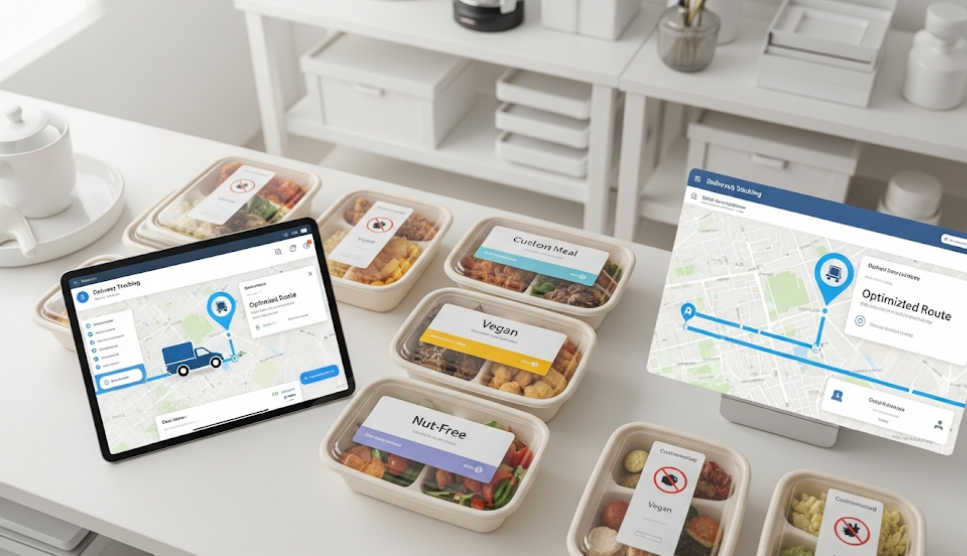
Delivery Route Optimization
Delivery efficiency directly affects profitability.
Without route optimization, businesses often experience:
Longer delivery times
Higher fuel costs
Driver inefficiencies
Reduced customer satisfaction
Delivery route optimization helps businesses improve:
Route planning
Delivery timing
Driver productivity
Cost control
For businesses managing multiple deliveries daily, optimized routing can have a substantial impact on operational performance.
Signs Your Business Has Outgrown Manual Operations
Many businesses continue using outdated processes longer than necessary.
Several warning signs indicate it may be time to upgrade systems.
Staff Constantly Need Updates
If employees frequently ask for:
Schedule changes
Order details
Event information
Delivery instructions
It may indicate communication systems are becoming inefficient.
Event Information Gets Lost
Missing customer requests, setup notes, or event updates often signal operational gaps.
Delivery Complaints Are Increasing
Late deliveries and communication issues can indicate delivery management challenges.
Managers Are Overwhelmed
If managers spend most of their time:
Updating spreadsheets
Coordinating schedules
Solving operational issues
The business may need better systems.
Growth Creates More Chaos Than Opportunity
Growth should improve profitability, not create constant operational stress.
When expansion becomes increasingly difficult to manage, operational systems often need improvement.
What to Look for in the Right Software Solution
Not every software platform is designed to support growing food businesses.
When evaluating solutions, businesses should focus on outcomes rather than feature lists.
Look for systems that help:
Reduce Administrative Work
Automation should eliminate repetitive tasks and improve efficiency.
Improve Communication
Teams should have access to accurate information when they need it.
Connect Operations
Orders, kitchen workflows, staffing, payroll, and deliveries should work together seamlessly.
Improve Visibility
Managers need real-time access to operational performance.
Support Growth
The right platform should help businesses scale without adding unnecessary complexity.
The Future of Catering and Meal Delivery Operations
Technology continues to reshape how food businesses operate.
Several trends are becoming increasingly important.
AI-Based Forecasting
Businesses are using predictive analytics to forecast:
Customer demand
Staffing needs
Production requirements
This helps improve planning and reduce waste.
Real-Time Operational Visibility
Live dashboards provide managers with immediate access to critical performance metrics.
Mobile-First Operations
Teams increasingly rely on mobile tools for:
Scheduling
Event management
Delivery coordination
Connected Business Ecosystems
Businesses are moving away from disconnected systems and toward unified operational platforms that improve visibility and communication.
Conclusion
As catering and meal delivery businesses grow, managing operations manually becomes increasingly difficult. Coordinating events, deliveries, staffing, kitchen production, and customer communication through spreadsheets and disconnected tools often creates unnecessary complexity.
Modern catering event management software and meal kit delivery software help businesses stay organized, improve efficiency, reduce administrative work, and create better customer experiences.
Platforms like Sprwt bring together Catering Management Software, Meal Prep Software, POS functionality, Kitchen Information Display Systems (KIDS), employee scheduling, timesheets, payroll management, and Delivery Route Optimization into one connected ecosystem. By centralizing these critical operational functions, food businesses can scale more confidently while maintaining the quality and consistency their customers expect.

Comments
Post a Comment