Why Personal Chefs and Event Caterers Need Better Systems
Being a successful personal chef or event caterer involves much more than preparing exceptional meals. Every booking requires careful planning, customer communication, scheduling, invoicing, kitchen coordination, staffing, and, in many cases, delivery logistics. As your business grows, keeping these moving parts organized becomes increasingly challenging.
Many personal chefs begin by managing everything manually. Client details are stored in spreadsheets, appointments are tracked on calendars, invoices are created individually, and customer updates happen through phone calls or email. While this approach may work for a small number of clients, it quickly becomes difficult to manage as bookings increase.

Whether you're handling private dinners, corporate lunches, weekly meal prep services, or large catering events, relying on manual processes can slow your business down. This is why many food businesses begin exploring Personal Chef Software and event invoicing software to simplify daily operations and create a more organized workflow.
The goal isn't simply to use more technology—it's to spend less time on administration and more time delivering exceptional food and service.
Why Growth Creates Operational Challenges
Every new client brings new opportunities, but also new responsibilities.
A growing personal chef or catering business may need to coordinate:
Private dining experiences
Corporate catering events
Weekly meal prep clients
Special dietary requirements
Event timelines
Kitchen preparation schedules
Staff assignments
Customer payments
Managing all of this through separate spreadsheets, notebooks, and email conversations can become overwhelming.
Instead of focusing on menu planning or customer relationships, many business owners find themselves spending hours every week handling administrative tasks.
Growth should create opportunities, not operational stress.
The Hidden Cost of Manual Operations
Many food businesses underestimate how much time and money manual processes actually cost.
While creating invoices, updating schedules, or tracking customer requests may seem like small tasks individually, they quickly add up.
Administrative Overload
Personal chefs and catering teams often spend valuable hours:
Updating client information
Scheduling bookings
Tracking event details
Preparing invoices
Following up on payments
Managing calendar changes
As bookings increase, administrative work often grows faster than revenue.
Customer Experience Challenges
Today's clients expect prompt communication and a professional booking experience.
Manual processes can result in:
Delayed responses
Missed customer requests
Scheduling confusion
Billing delays
Event miscommunication
Even if the food is outstanding, poor organization can affect client satisfaction.
Profitability Issues
Disorganized operations often create unnecessary expenses through:
Payroll inefficiencies
Delivery delays
Administrative labor
Billing mistakes
Missed payment opportunities
Improving operations helps businesses protect both their reputation and their profits.
How Personal Chef Software Helps Organize Daily Operations
As businesses grow, staying organized becomes just as important as culinary expertise.
Personal Chef Software helps create a structured workflow that keeps customer information, bookings, and operational tasks connected.
Centralized Client Information
Every customer has unique preferences.
Businesses often need to track:
Dietary restrictions
Favorite meals
Delivery preferences
Event history
Contact information
Keeping everything in one place makes it easier to deliver a consistent customer experience.
Better Booking Management
Managing multiple bookings manually increases the risk of scheduling conflicts.
Organized booking management helps businesses coordinate:
Private dinners
Weekly meal prep clients
Catering events
Corporate lunches
Special occasions
This gives managers greater visibility into upcoming work.
Improved Workflow Organization
Rather than switching between calendars, spreadsheets, and messaging apps, businesses can create a more streamlined process for managing daily operations.

This reduces confusion while improving communication across the team.
Less Administrative Work
One of the biggest advantages of better systems is reducing repetitive tasks.
Instead of spending evenings updating paperwork, business owners can focus on:
Serving clients
Developing menus
Building relationships
Growing the business
Why Event Invoicing Software Matters
Invoices play an important role in every successful food business.
Whether serving a private chef client or managing a large catering event, businesses need a reliable way to bill customers accurately and on time.
This is where event invoicing software becomes valuable.
Faster Billing
Manual invoicing often requires businesses to:
Re-enter customer information
Calculate totals
Review deposits
Verify pricing
This process can delay payments and create unnecessary administrative work.
Efficient invoicing workflows help businesses send invoices more quickly and consistently.
Better Payment Visibility
As event volume grows, it becomes harder to track:
Deposits
Outstanding balances
Partial payments
Completed invoices
Improved visibility allows businesses to manage cash flow more effectively.
Reduced Billing Errors
Manual billing increases the risk of mistakes such as:
Incorrect pricing
Missing services
Duplicate invoices
Forgotten deposits
Accurate invoicing improves customer confidence while reducing follow-up work.
A More Professional Client Experience
Professional invoices help reinforce trust.
Customers appreciate clear documentation that explains:
Services provided
Payment expectations
Outstanding balances
Event costs
Simple, organized billing contributes to a smoother customer journey.
The Operational Systems Growing Food Businesses Need
Managing bookings and invoices is only one part of running a successful food business.
As operations expand, businesses benefit from systems that keep different functions connected.
Catering and Event Management
Managing customer information, bookings, event details, and order information from a centralized system helps improve communication and reduce administrative work.
Instead of searching across multiple platforms, teams can access important information from one place.
POS Integration
A connected Point-of-Sale (POS) system supports:
Payment processing
Customer transactions
Sales reporting
Financial visibility
Integrated payment management helps businesses better understand daily performance.
Kitchen Information Display System (KIDS)
Kitchen communication becomes increasingly important during busy production periods.
A Kitchen Information Display System (KIDS) helps teams:
View orders digitally
Improve preparation accuracy
Reduce communication gaps
Organize production schedules
Digital kitchen workflows help reduce mistakes while improving efficiency.
Employee Scheduling, Timesheets, and Payroll
As teams grow, workforce management becomes more complex.
Businesses often need to coordinate:
Kitchen staff
Event teams
Delivery drivers
Administrative employees
Integrated HR tools help simplify:
Staff scheduling
Timesheet tracking
Payroll management
Labor reporting
This reduces administrative effort while improving workforce visibility.
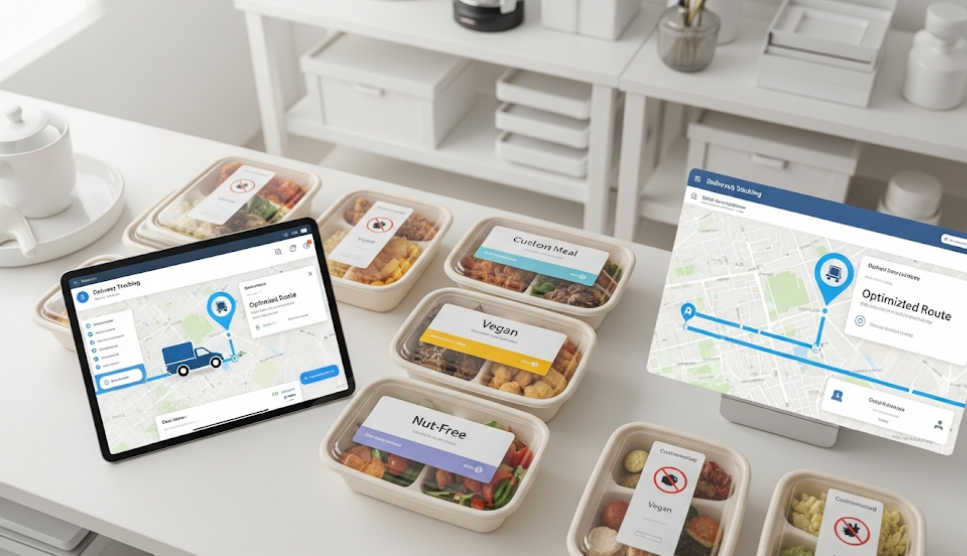
Delivery Route Optimization
Many personal chefs and event caterers now offer meal delivery alongside traditional services.
Efficient delivery planning helps businesses improve:
Route efficiency
Delivery timing
Driver productivity
Fuel costs
Customer satisfaction
Reliable deliveries strengthen client relationships and improve operational performance.
Signs Your Current Process Is Limiting Growth
Many businesses continue using familiar systems because they seem manageable.
However, several warning signs suggest it's time to improve operational workflows.
You may need better systems if:
Customer information is scattered across different platforms.
Preparing invoices takes longer than expected.
Staff frequently ask for schedule updates.
Payment tracking has become difficult.
Managers spend evenings completing administrative tasks.
Event details are occasionally missed.
Administrative work limits business growth.
These challenges often indicate that manual processes can no longer support your growing operation.
Choosing Software That Supports Long-Term Growth
The best operational systems don't simply add more features—they make daily work easier.
When evaluating solutions, businesses should look for systems that help:
Reduce Manual Work
Automation should eliminate repetitive administrative tasks.
Improve Communication
Everyone should have access to accurate operational information.
Connect Different Parts of the Business
Customer bookings, kitchen operations, staffing, invoicing, and deliveries should work together rather than exist in separate systems.
Increase Operational Visibility
Managers need clear insight into bookings, staffing, payments, and daily performance.
Scale Alongside the Business
The right solution should continue supporting the business as bookings and customers grow.
The Future of Personal Chef and Catering Operations
Technology continues to reshape the food service industry.
Several trends are helping businesses improve efficiency.
Digital Client Management
Businesses increasingly rely on centralized systems to manage customer relationships and bookings.
Automated Billing
Digital invoicing helps improve payment timelines while reducing administrative work.
Real-Time Operational Visibility
Live dashboards provide managers with immediate access to business performance.
Mobile Workforce Management
Scheduling, communication, and operational updates are increasingly managed through mobile devices.
Connected Business Platforms
Rather than relying on multiple disconnected systems, food businesses are adopting integrated operational platforms that improve visibility and efficiency.
Conclusion
As personal chef businesses and event catering companies grow, managing clients, bookings, invoices, staffing, and deliveries manually becomes increasingly difficult. Administrative tasks can quickly consume the time that should be spent creating exceptional dining experiences and building stronger client relationships.
Personal Chef Software and event invoicing software help simplify these daily responsibilities by improving organization, streamlining billing, and creating more efficient workflows.
Platforms like Sprwt bring together Meal Prep Software, Catering Management Software, POS functionality, Kitchen Information Display Systems (KIDS), HR tools for scheduling, timesheets and payroll, plus Delivery Route Optimization into one connected operational ecosystem. By centralizing these essential functions, personal chefs and event caterers can reduce operational complexity, improve customer experiences, and confidently grow their business.


Comments
Post a Comment