Managing Catering Events Manually? Best Catering Software Scales Better
Catering businesses are built on coordination, timing, and customer experience. Whether it’s a corporate lunch delivery, wedding reception, private event, or recurring office catering account, every order involves multiple moving parts that must work together smoothly.
But many catering businesses still rely heavily on spreadsheets, phone calls, handwritten notes, paper tickets, and disconnected systems to manage operations.
At first, manual processes may seem manageable. However, as catering businesses grow, operational complexity increases quickly. More events, more delivery schedules, larger teams, customized menus, and higher customer expectations can create serious operational pressure.

This is why many food businesses begin searching for the best catering software and meal delivery software to improve efficiency and scale operations more effectively.
The right software does more than organize orders. It helps businesses streamline event management, improve kitchen communication, optimize deliveries, reduce administrative work, and create a smoother customer experience.
Why Manual Catering Management Becomes a Problem
Many catering companies do not realize how much time and money manual systems cost until operational problems start becoming frequent.
A growing catering business may manage:
Multiple events per day
Different delivery windows
Large group orders
Last-minute modifications
Staffing coordination
Kitchen production schedules
Driver dispatching
When these tasks are handled manually, mistakes become much more likely.
Common operational issues include:
Missed event details
Incorrect delivery timing
Double-booked schedules
Lost customer notes
Kitchen preparation confusion
Delayed deliveries
Payroll and scheduling problems
As order volume increases, managers often spend more time solving operational problems than focusing on business growth.
This is where the best catering software becomes essential.
What Is Catering Software?
Catering software is designed to help catering businesses organize and automate daily operations from one centralized system.
Instead of using separate tools for scheduling, invoicing, staffing, kitchen management, and deliveries, businesses can streamline operations through connected workflows.
Modern catering software typically helps businesses manage:
Catering orders
Event scheduling
Customer communication
Production planning
Delivery coordination
Staff scheduling
Payments and invoicing
Reporting and analytics
The goal is to reduce manual work while improving operational visibility and efficiency.
For example, when a customer updates an event order, the software can automatically reflect those changes across kitchen production schedules, delivery planning, and staffing coordination.
Without centralized systems, these updates often require multiple phone calls, manual edits, and an increased risk of communication errors.
Why Scaling Catering Operations Is Difficult Without Software
Scaling a catering business involves much more than increasing order volume.
As businesses grow, operations become more complex in several areas simultaneously.
Event Coordination Becomes Harder
A catering business may handle:
Corporate catering
Weddings
Private parties
School events
Weekly office meal programs
Each event may involve:
Different menus
Different preparation schedules
Unique staffing needs
Multiple delivery locations
Setup requirements
Dietary restrictions
Managing this manually becomes increasingly difficult.
Without organized systems, businesses often experience:
Missed details
Scheduling conflicts
Last-minute confusion
Poor communication between teams
The best catering software helps businesses centralize event information and improve organization.
Kitchen Communication Problems Slow Operations

However, many kitchens still rely on paper tickets or verbal communication during busy production hours.
This creates problems such as:
Lost tickets
Incorrect meal modifications
Delayed preparation
Confusing order priorities
Inconsistent communication
As catering orders grow larger and more customized, kitchen coordination becomes more challenging.
Kitchen Information Display Systems (KIDS) help improve kitchen workflows by displaying orders digitally in real time.
This allows kitchen staff to:
View incoming orders immediately
Prioritize production more efficiently
Reduce communication errors
Improve preparation timing
Increase order accuracy
For catering businesses handling large production volumes, digital kitchen workflows can significantly improve operational speed and consistency.
Meal Delivery Software Helps Solve Delivery Challenges
Delivery logistics are one of the biggest operational pain points for catering businesses.
Late deliveries can negatively affect customer trust, especially for:
Corporate catering
Business lunches
Large events
Time-sensitive meal deliveries
Manual delivery coordination often leads to:
Inefficient driver routes
Delivery delays
Fuel waste
Dispatch confusion
Missed delivery windows
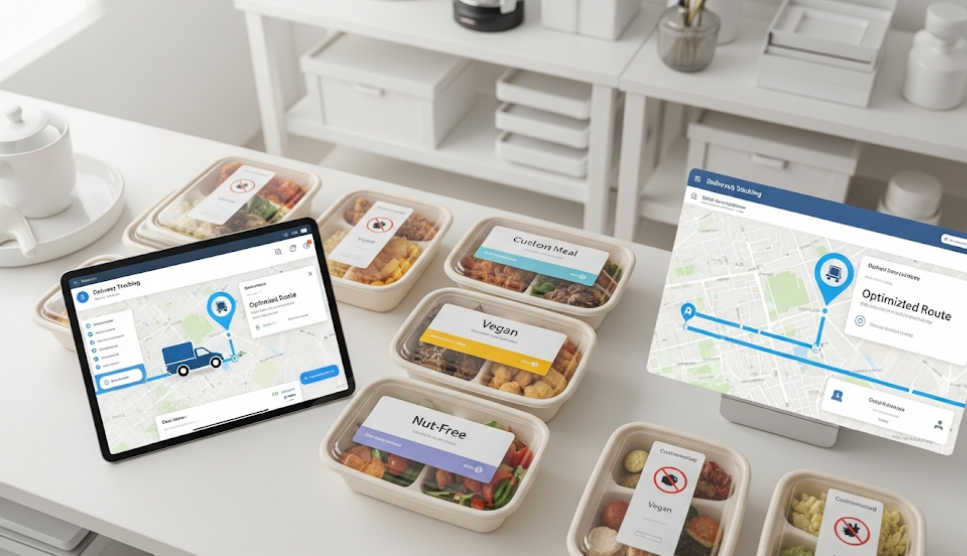
Meal delivery software helps businesses organize and optimize delivery operations.
Features often include:
Driver dispatching
Real-time delivery tracking
Customer notifications
Route optimization
Delivery zone management
Multi-stop delivery coordination
Instead of manually assigning delivery routes, businesses can automate delivery planning based on:
Delivery windows
Route efficiency
Driver assignments
Geographic zones
This helps businesses reduce operational costs while improving delivery reliability.
Staffing & Payroll Become More Difficult as Businesses Grow
Labor management becomes increasingly complicated for growing catering businesses.
Managers often struggle with:
Scheduling staff for multiple events
Tracking employee hours
Managing overtime
Payroll calculations
Last-minute staffing adjustments
Without centralized scheduling systems, staffing issues can create operational stress and inefficiencies.
Integrated HR and payroll tools help businesses:
Manage employee schedules
Track timesheets
Monitor labor costs
Reduce payroll errors
Improve workforce visibility
For businesses operating multiple catering events simultaneously, organized labor management becomes essential for maintaining operational consistency.
The Best Catering Software Connects Operations Together
One of the biggest problems food businesses face is using disconnected tools for different operational tasks.
For example, businesses may use:
One platform for orders
Another for payroll
Separate scheduling tools
Manual spreadsheets for deliveries
Paper systems in the kitchen
Disconnected systems create duplicate work and communication gaps.
The best catering software helps unify operations into one connected workflow.
Integrated systems can connect:
Catering management
Kitchen operations
POS systems
Delivery logistics
Scheduling
Payroll
Reporting
This creates smoother communication between departments while reducing manual administrative work.
POS Integration Improves Order Management
Point-of-Sale (POS) integration plays an important role in modern catering operations.
A connected POS system helps businesses:
Sync online and in-store orders
Manage payments
Track customer purchases
Generate sales reports
Improve operational visibility
Without centralized order management, businesses often experience:
Duplicate orders
Missing customer details
Payment tracking issues
Reporting inconsistencies
Integrated POS systems help simplify operations while improving accuracy across sales channels.
Delivery Route Optimization Improves Efficiency
As delivery volume grows, route planning becomes increasingly important.
Without route optimization tools, drivers may:
Take inefficient routes
Waste fuel
Miss delivery windows
Spend more time on the road
Delivery route optimization software helps businesses automate route planning for better efficiency.
Benefits include:
Faster deliveries
Lower fuel costs
Better driver productivity
Improved customer satisfaction
Reduced operational expenses
For catering businesses handling multiple deliveries daily, optimized routing can significantly improve profitability.
Signs Your Catering Business Has Outgrown Manual Systems
Many businesses continue using manual systems longer than they should.
However, certain operational problems often indicate the need for better software.
Frequent Delivery Complaints
If customers regularly complain about:
Late deliveries
Missing items
Incorrect orders
Your delivery operations may need better coordination tools.
Managers Spend Too Much Time on Admin Work
If managers spend hours handling:
Scheduling
Payroll
Order updates
Delivery coordination
Customer communication
Manual systems may be limiting productivity.
Kitchen Bottlenecks Are Increasing
Slow kitchen workflows often indicate:
Poor communication systems
Disorganized preparation processes
Lack of operational visibility
Scaling Feels More Difficult
If growth creates operational chaos instead of efficiency, disconnected systems may be preventing scalability.
The best catering software helps businesses scale without dramatically increasing administrative complexity.
Future Trends in Catering & Meal Delivery Technology
Technology continues transforming how catering and delivery businesses operate.
Several trends are becoming increasingly important.
AI-Based Forecasting
Businesses are using predictive analytics to forecast:
Customer demand
Staffing needs
Ingredient usage
Delivery volume
This improves planning and reduces operational waste.
Automated Dispatching
Modern meal delivery software is improving driver coordination through automated dispatch systems and smarter route planning.
Real-Time Operational Reporting
Businesses increasingly rely on live dashboards to monitor:
Sales performance
Delivery efficiency
Kitchen productivity
Labor costs
Centralized Operational Platforms
Food businesses are moving away from disconnected systems and adopting unified platforms that manage operations from one ecosystem.
This improves communication, visibility, and operational control.
Conclusion
Managing catering events manually may work temporarily, but growing businesses eventually need better systems to handle increasing operational complexity.
The best catering software helps businesses streamline event coordination, improve kitchen communication, optimize deliveries, manage staffing, reduce administrative work, and scale operations more efficiently.
Meal delivery software also plays a critical role in improving dispatch coordination, route planning, delivery tracking, and customer satisfaction.
For growing food businesses, connected systems create smoother workflows while reducing operational stress and improving profitability.
Platforms like Sprwt help catering businesses unify event management, kitchen operations, POS systems, HR tools, payroll management, and delivery logistics into one centralized operational ecosystem designed for long-term scalability.
Meal delivery software also plays a critical role in improving dispatch coordination, route planning, delivery tracking, and customer satisfaction.
For growing food businesses, connected systems create smoother workflows while reducing operational stress and improving profitability.
Platforms like Sprwt help catering businesses unify event management, kitchen operations, POS systems, HR tools, payroll management, and delivery logistics into one centralized operational ecosystem designed for long-term scalability.

Comments
Post a Comment