Struggling to Keep Catering Orders and Deliveries Organized?
Running a catering business successfully requires more than preparing great food. Every order, event, delivery, employee schedule, and customer request must work together smoothly to create a positive customer experience.
For many growing food businesses, staying organized becomes increasingly difficult as operations expand. What starts as a handful of weekly catering orders can quickly evolve into managing corporate events, recurring meal deliveries, multiple drivers, kitchen production schedules, and a growing workforce.

At first, spreadsheets, emails, text messages, and paper tickets may seem sufficient. However, as order volume increases, these manual systems often become the source of operational bottlenecks.
This is why many businesses begin looking for the best catering software and meal delivery software to help simplify operations, improve visibility, and support growth.
The challenge isn't simply handling more orders. It's keeping every part of the operation connected and organized.
Why Growth Creates Operational Complexity
Growth is usually the goal of every catering business.
More orders, more events, and more customers often mean higher revenue opportunities.
However, growth also creates new challenges.
A catering company that once handled a few events per week may suddenly need to manage:
Corporate lunch programs
Wedding catering
Private events
Recurring meal deliveries
Multiple delivery routes
Larger kitchen production schedules
Additional staff members
Each new order introduces more information that must be tracked accurately.
Managers must coordinate:
Customer requests
Event schedules
Delivery times
Employee assignments
Kitchen production
Payment processing
Without efficient systems, operational complexity can quickly outpace a company's ability to manage it.
The Hidden Cost of Disorganized Operations
Many food businesses underestimate how much disorganization affects profitability.
The impact often extends far beyond occasional mistakes.
Administrative Overload
As businesses grow, managers often spend increasing amounts of time on administrative tasks such as:
Updating spreadsheets
Confirming delivery schedules
Managing employee shifts
Tracking customer changes
Reviewing orders
While these activities are necessary, they often consume valuable time that could be spent improving operations or generating new business.
Customer Experience Problems
Customers expect professionalism and reliability.
Disorganized operations can lead to:
Missed order details
Delivery delays
Incorrect meal modifications
Poor communication
Last-minute confusion
Even small mistakes can affect customer trust and future bookings.
Increased Operating Costs
Operational inefficiencies often create unnecessary expenses.
Examples include:
Overtime labor
Fuel waste
Delivery delays
Food waste
Payroll errors
Over time, these costs can significantly affect profitability.
Why the Best Catering Software Matters
Many catering businesses attempt to solve growth challenges by hiring more people.
While staffing is important, adding employees without improving systems often creates additional complexity.
The best catering software helps businesses create structure around their operations.
Rather than relying on multiple disconnected tools, businesses can centralize important workflows.
This allows teams to manage:
Catering orders
Customer information
Event details
Production schedules
Staffing requirements
from a more organized operational environment.
Centralized Order Management
One of the most common causes of operational confusion is fragmented information.
Orders may arrive through:
Website forms
Phone calls
Email inquiries
Corporate accounts
Repeat customers
When information is stored across multiple locations, errors become more likely.
Centralized order management helps businesses keep critical information organized and accessible.
Better Event Coordination
Every catering event involves multiple details.
Businesses must manage:
Guest counts
Menu selections
Delivery schedules
Setup instructions
Staffing assignments
Without visibility into these details, coordination becomes difficult.
Modern systems help teams stay aligned while reducing communication breakdowns.
Improved Operational Visibility
Managers need access to accurate information to make effective decisions.
The best catering software provides visibility into:
Upcoming events
Order status
Production requirements
Labor needs
Delivery schedules
Better visibility allows businesses to identify problems before they become customer issues.
Why Meal Delivery Software Has Become Essential

Food delivery expectations have changed dramatically.
Customers expect convenience, consistency, and reliability.
For businesses offering recurring meal plans, catering deliveries, or prepared meals, delivery operations have become a critical part of customer satisfaction.
This is where meal delivery software plays an important role.
Managing Delivery Complexity
Delivery operations often involve:
Multiple drivers
Different delivery windows
Route planning
Customer communication
Last-minute adjustments
Managing these tasks manually becomes increasingly difficult as volume grows.
Improving Delivery Reliability
Late deliveries can negatively affect customer relationships.
Businesses that consistently meet delivery expectations often benefit from:
Higher customer retention
Better reviews
Increased referrals
Improved customer trust
Meal delivery software helps businesses improve consistency across delivery operations.
Supporting Growth
As delivery volume increases, businesses need systems that can scale efficiently.
Without proper coordination, growth often creates:
More delivery complaints
Higher operating costs
Increased driver confusion
Reduced customer satisfaction
Effective delivery management helps businesses maintain service quality while expanding operations.
The Systems Modern Food Businesses Need
Operational success depends on more than order management alone.
Growing food businesses need several systems working together.
Kitchen Information Display Systems (KIDS)
Kitchen communication is critical for maintaining speed and accuracy.
Many businesses still rely on paper tickets or verbal communication.
These methods can lead to:
Missed modifications
Preparation delays
Communication gaps
Production bottlenecks
A Kitchen Information Display System (KIDS) provides digital visibility into kitchen workflows.
Benefits include:
Better communication
Faster preparation
Improved order accuracy
More organized production schedules
For businesses handling high order volumes, digital kitchen workflows can significantly improve efficiency.
Unified POS Operations
Point-of-Sale systems help businesses manage customer transactions and sales data.
Integrated POS operations provide:
Payment processing
Sales tracking
Customer purchase history
Reporting visibility
Rather than managing separate systems, businesses gain a clearer picture of overall performance.
Employee Scheduling, Timesheets, and Payroll
Labor management becomes increasingly complex as teams grow.
Managers often need to coordinate:
Kitchen staff
Event teams
Drivers
Administrative employees
Without proper systems, scheduling conflicts and payroll issues become more common.
Integrated workforce management tools help businesses:
Schedule employees
Track labor hours
Manage payroll
Monitor labor costs
This improves operational efficiency while reducing administrative burden.
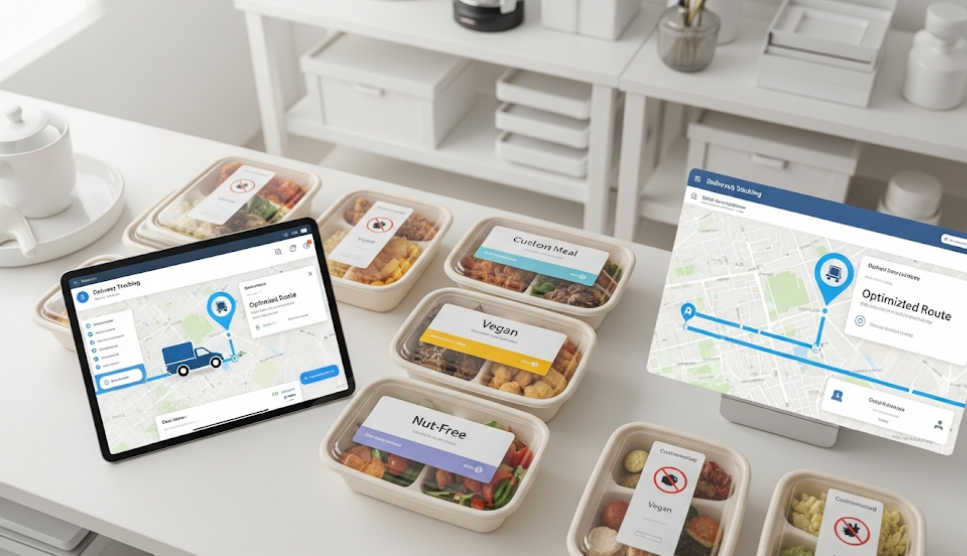
Delivery Route Optimization
Delivery logistics directly affect profitability.
Poor route planning can result in:
Increased fuel costs
Longer delivery times
Driver inefficiencies
Customer complaints
Delivery route optimization helps businesses improve:
Driver productivity
Delivery reliability
Fuel efficiency
Customer satisfaction
For businesses managing multiple deliveries every day, route optimization can have a meaningful impact on operating costs.
Signs Your Current Systems Are Limiting Growth
Many businesses continue using outdated processes because they have become familiar.
However, certain warning signs indicate operational systems may be holding the business back.
Staff Constantly Need Updates
If employees frequently ask for:
Order details
Schedule changes
Event information
Delivery instructions
it may indicate communication processes are becoming inefficient.
Delivery Complaints Are Increasing
Late deliveries and inconsistent service often point to operational challenges.
Managers Are Overwhelmed by Administrative Work
If leadership spends most of their time:
Updating spreadsheets
Coordinating schedules
Tracking deliveries
Managing payroll
there may be opportunities to improve efficiency.
Event Information Gets Lost
Missed customer requests, forgotten modifications, and communication breakdowns often indicate operational systems need improvement.
Growth Feels More Stressful Than Profitable
Growth should create opportunities.
If every increase in order volume creates additional chaos, existing processes may no longer be sustainable.
What to Look for When Evaluating Software
Choosing software should focus on business outcomes rather than simply comparing feature lists.
The right solution should help businesses:
Reduce Administrative Work
Automation should eliminate repetitive tasks and improve efficiency.
Improve Communication
Teams need accurate information without relying on constant follow-up conversations.
Connect Operations
Orders, kitchen production, staffing, payroll, and deliveries should work together seamlessly.
Increase Visibility
Managers should have access to real-time operational information.
Support Future Growth
The system should scale alongside the business without creating additional complexity.
Eliminate Multiple Disconnected Tools
Centralized operations help reduce duplicate work and improve consistency.
The Future of Food Business Operations
Technology continues to change how catering and delivery businesses operate.
Several trends are shaping the future.
AI-Based Forecasting
Businesses are increasingly using forecasting tools to better predict:
Customer demand
Labor requirements
Production needs
This helps improve planning and reduce waste.
Real-Time Operational Visibility
Live dashboards provide managers with immediate access to performance data.
Mobile-First Operations
Teams increasingly manage schedules, deliveries, and operational updates through mobile devices.
Unified Business Platforms
Businesses are moving away from disconnected systems and toward integrated operational ecosystems that improve communication and visibility.
Conclusion
Keeping catering orders and deliveries organized becomes significantly more challenging as businesses grow. Managing events, deliveries, staffing, kitchen production, and customer communication through spreadsheets and disconnected tools often creates operational friction that limits scalability.
The best catering software and meal delivery software help businesses create more efficient workflows, improve communication, reduce administrative work, and maintain better control over daily operations.
Platforms like Sprwt bring together Catering Software, Meal Prep Software, POS functionality, Kitchen Information Display Systems (KIDS), HR tools for scheduling, timesheets and payroll, and Delivery Route Optimization into one connected ecosystem. By centralizing these critical operational functions, food businesses can improve efficiency, reduce complexity, and scale with greater confidence.


Comments
Post a Comment