Catering Business Software Explained: Managing Events, Orders, and Operations
Running a catering business is fundamentally different from running a restaurant. Catering companies must handle multiple events, large and variable order sizes, customized menus, strict timelines, staff coordination, delivery logistics, and billing, all often happening at the same time. As catering businesses grow, managing these moving parts manually becomes increasingly complex.

This is where catering business software and catering management software play a critical role. These systems are designed to support the operational realities of catering businesses by organizing workflows, reducing errors, and improving visibility across the entire operation.
In this article, we explain what catering business software is, how catering management software works, and how these systems help catering companies manage events, orders, and daily operations more effectively.
Understanding the Complexity of Catering Operations
Catering businesses operate in a high-variation environment. Unlike restaurants with predictable menus and service hours, catering companies must adapt to:
Different event types (corporate, weddings, private parties, recurring orders)
Varying guest counts
Customized menus and dietary requirements
Different venues and delivery locations
Temporary staffing needs
Tight preparation and delivery schedules
Each event represents a unique operational plan. Without a structured system, information is often scattered across emails, spreadsheets, calendars, and paper notes. This fragmentation increases the risk of miscommunication, food waste, missed deadlines, and billing errors.
Catering business software exists to centralize this information into a single, reliable system.
What Is Catering Business Software?
Catering business software is a digital platform designed to manage the day-to-day and event-based operations of catering companies. Its purpose is to organize information, automate repetitive tasks, and support coordination between teams.
At a high level, catering business software helps businesses:
Manage event inquiries and confirmed orders
Plan menus and pricing
Track ingredients and inventory
Coordinate kitchen production
Schedule staff and deliveries
Generate invoices and track payments
Store client history and preferences
Analyze operational and financial performance
Instead of relying on multiple disconnected tools, catering businesses can operate from a centralized system.
What Is Catering Management Software?
The term catering management software is often used interchangeably with catering business software, but it typically refers to systems that provide more advanced, end-to-end operational control.
Catering management software focuses on:
Managing multiple events simultaneously
Coordinating staff, kitchen, and logistics teams
Aligning production with delivery schedules
Providing reporting and analytics for decision-making
In practice, modern platforms combine both catering business software and catering management software capabilities into a single solution.
Managing Events with Catering Business Software
Event management is at the core of catering operations. Each event involves multiple variables that must be tracked accurately.

Catering business software helps manage events by:
Centralizing event details (date, time, venue, guest count)
Storing menu selections and dietary requirements
Tracking changes and updates in one place
Providing visibility to the kitchen, delivery, and sales teams
With a centralized event record, teams can work from the same information, reducing miscommunication and last-minute errors.
Order Management and Menu Planning
Catering orders often include complex menu requirements, including custom dishes, substitutions, and portion adjustments. Managing these details manually can lead to inconsistencies.
Catering management software supports order management by:
Creating structured order records
Linking menus to ingredient requirements
Adjusting quantities automatically based on guest count
Ensuring consistency across similar events
This structured approach allows kitchens to prepare confidently and consistently.
Kitchen Production and Preparation Planning
Once orders are confirmed, catering businesses must plan production efficiently. Preparing too much food increases waste, while preparing too little creates service issues.
Catering business software helps kitchens by:
Converting orders into preparation and production plans
Supporting batch cooking calculations
Providing clear preparation timelines
Reducing reliance on manual calculations
These tools help kitchens prepare accurately and maintain quality across events.
Inventory Management and Ingredient Planning
Ingredient management is a significant cost factor for catering businesses. Without accurate tracking, businesses often over-purchase or experience last-minute shortages.
Catering management software supports inventory planning by:
Tracking ingredient usage across events
Aligning inventory with confirmed orders
Improving visibility into stock levels
Supporting smarter purchasing decisions
By connecting menus to inventory data, businesses gain better control over food costs and waste.
Staff Scheduling and Coordination
Catering operations rely on flexible staffing. Each event may require a different combination of chefs, servers, drivers, and support staff.
Catering business software helps with staff coordination by:
Scheduling staff based on event requirements
Avoiding overstaffing or understaffing
Improving visibility into staff availability
Supporting smoother communication between teams
Clear scheduling reduces confusion and improves operational efficiency.
Delivery and Logistics Planning
Delivery is a critical component of catering operations. Late or incorrect deliveries can undermine an otherwise successful event.
Catering management software supports delivery planning by:
Organizing delivery times and locations
Coordinating preparation and dispatch schedules
Reducing logistical errors
Supporting consistent execution across events
When delivery planning is aligned with production data, businesses can meet tight timelines more reliably.
Invoicing, Payments, and Financial Tracking
Catering businesses often deal with deposits, partial payments, and post-event billing. Managing these processes manually increases the risk of errors and delays.
Catering business software supports financial workflows by:
Generating invoices based on confirmed orders
Tracking deposits and outstanding balances
Supporting payment processing
Improving financial visibility
Clear billing processes improve cash flow and client satisfaction.
Client Management and Relationship Building
Repeat business is essential for catering companies, particularly those serving corporate clients or recurring events.
Catering management software helps manage client relationships by:
Storing client contact information
Tracking order history and preferences
Supporting consistent service across events
Improving follow-up and communication
Centralized client records help businesses build long-term relationships.
Improving Daily Operations with Catering Management Software
Beyond individual events, catering management software improves day-to-day operations by providing structure and predictability.
Daily operational benefits include:
Fewer scheduling conflicts
Clearer preparation plans
Better coordination between departments
Reduced administrative workload
Improved visibility into upcoming events
These improvements allow teams to focus on service quality rather than manual coordination.
Supporting Growth and Scalability
As catering businesses grow, complexity increases. More events, more staff, and more clients require systems that scale.
Catering business software supports growth by:
Managing higher event volumes without added complexity
Supporting multi-location operations
Standardizing workflows across teams
Providing data to guide expansion decisions
Scalable systems help businesses grow sustainably.
Catering Business Software and Hybrid Operations
Many catering businesses also offer meal prep, corporate lunch programs, or recurring delivery services. Managing these hybrid models manually is challenging.
Modern catering management software can support:
One-time events and recurring orders
Shared inventory across service types
Unified client and order management
Consolidated reporting
This flexibility allows businesses to diversify without adding operational strain.
How Platforms Like Sprwt Support Catering Businesses
Platforms such as Sprwt are designed to support catering businesses by combining multiple operational functions into a single system.
Sprwt supports catering operations by offering:
Centralized order and event management
Production and preparation reporting
Inventory tracking and waste reduction tools
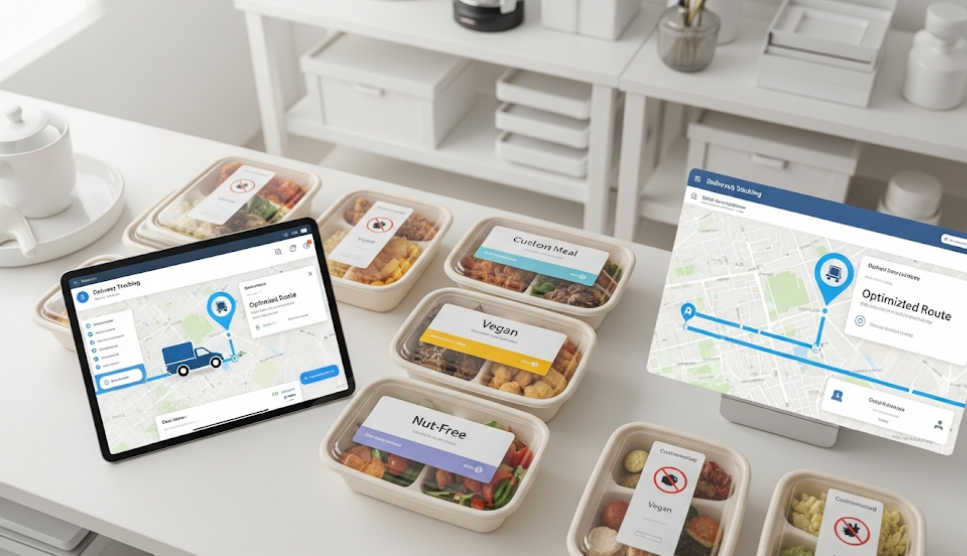
Delivery route planning and coordination
Customer and client management features
Billing, POS, and payment support
Analytics for operational visibility
Support for both catering and meal prep workflows
By centralizing these capabilities, platforms like Sprwt help catering businesses operate with greater clarity and consistency.
Catering Business Software in 2026: Operational Expectations
In 2026, catering businesses are expected to operate with higher levels of accuracy, transparency, and efficiency. Clients expect reliable execution, clear communication, and professional service.
Catering management software is increasingly expected to:
Support complex event scheduling
Integrate kitchen, delivery, and finance workflows
Provide real-time operational insights
Scale alongside the business
These expectations reflect the growing importance of structured systems in catering operations.
Frequently Asked Questions (FAQs)
What is catering business software used for?
Catering business software is used to manage events, orders, menus, inventory, staff scheduling, delivery logistics, invoicing, and client relationships in catering operations.
What is the difference between catering business software and catering management software?
Catering business software focuses on operational tasks, while catering management software typically provides more advanced, end-to-end control over events, resources, and analytics. Many modern platforms combine both.
Can catering software handle multiple events at the same time?
Yes, catering management software is designed to manage multiple events simultaneously by centralizing schedules, resources, and preparation plans.
How does catering business software reduce food waste?
By linking menus to inventory and production planning, catering software helps businesses prepare accurate quantities and avoid over-purchasing.
Is catering management software suitable for small businesses?
Yes, catering software can help small businesses operate more efficiently and scale gradually by reducing manual work and improving coordination.
Can catering business software support delivery operations?
Yes, many catering platforms include delivery planning tools that help coordinate preparation schedules and delivery logistics.
Conclusion
Catering business software and catering management software have become essential tools for modern catering companies. These systems help businesses manage events, orders, and operations with greater accuracy, efficiency, and control.
By centralizing workflows and reducing reliance on manual processes, catering software supports consistency, scalability, and improved client experiences. Platforms like Sprwt demonstrate how integrated systems can support catering businesses as they grow and adapt to evolving operational demands.
As catering operations become more complex in 2026, structured, purpose-built software will continue to play a central role in sustainable success.


Comments
Post a Comment